Managing Equipment Transitions: When New Tech Scares Your Best Techs
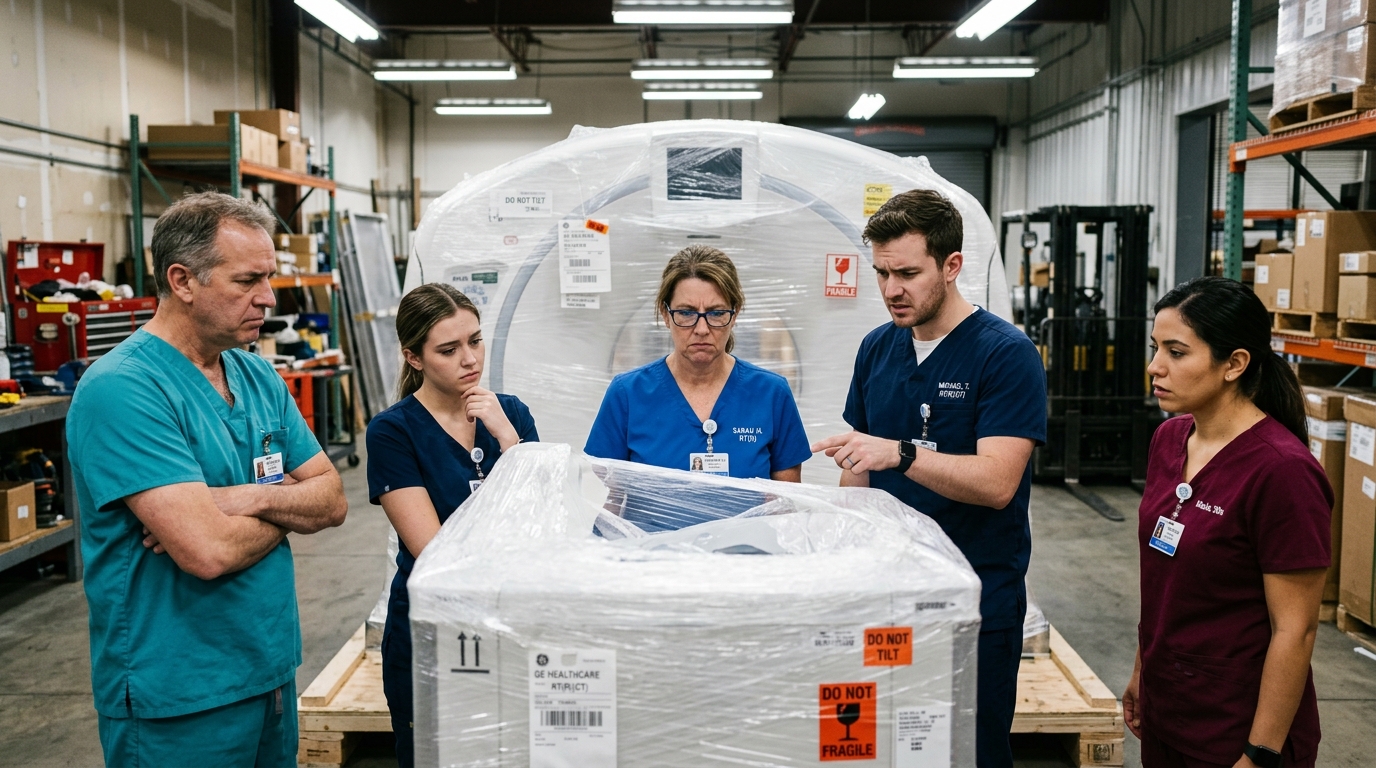
I'm going to tell you something that nobody wants to admit in those shiny equipment vendor presentations: when you bring a new imaging system into your department, your best, most experienced technologists will be the first ones to panic.
Counterintuitive, right? You'd think veterans would be confident. Instead, I watched our star MRI tech—someone who'd been with us twelve years, trained half the department, absolutely brilliant—start job hunting the week we announced our new 3.0T scanner upgrade. She was convinced she couldn't learn new technology. She was literally planning to leave rather than try.
That's the equipment transition crisis that nobody talks about. And I've seen it happen so many times that I can now predict exactly which staff members will struggle, when they'll struggle, and what interventions actually work.
If you're a department manager or educator facing an equipment transition, this is critical: how you handle the next six months will determine whether you retain your best staff or lose them to other facilities. Let me tell you what I learned managing four major equipment transitions and training hundreds of technologists through them.
Why Your Best Techs Are Most Vulnerable
This seems backwards, but it's actually logical. Your most experienced technologists have mastered their current equipment. They're confident. They know every button, every protocol adjustment, every workaround. They can troubleshoot problems intuitively. That mastery took years.
Now you're introducing equipment that makes all that expertise irrelevant. Suddenly, the tech who's been "the CT expert" is back to being a beginner. The MRI tech who trains everyone else is now in a room with equipment they don't understand.
Here's the psychological piece that matters: experienced techs have identity invested in their expertise. A newer tech thinks, "I don't know this yet, but I will." An experienced tech thinks, "I should already know this, and I don't, so maybe I'm not good at this job anymore."
That's the difference. And if you don't address it directly, they'll leave. I've seen facilities lose excellent people because they didn't validate the legitimacy of the learning curve.
I remember talking to Marcus, one of our CT techs, when we got a new multislice system. He said, "Julie, I've been doing this for eight years. I should be able to figure this out on my own." I had to literally tell him: "No. This is a different system. Everyone starts here, including you. That's not a failure—that's reality."
Permission to be a learner again is surprisingly powerful.
The Communication Mistake Everyone Makes
Most facilities announce new equipment and then tell staff there will be training. That's it. Staff members are left to catastrophize for weeks.
Here's what actually works: transparency combined with timeline.
Four months before arrival: Announce the equipment, explain why you're getting it (better patient outcomes, capability expansion, efficiency gains—pick the real reasons), and give realistic timelines. Say, "Training starts in month three. Everyone will have dedicated training time. This is a priority. We're not just throwing you at it."
Three months before: Start collecting information about the equipment. Bring in vendor representatives to do an informal lunch-and-learn. Not a training session—just exposure. "This is what's coming. Here's what it can do." Hands-off. Low stakes.
Two months before: Identify your "super-users"—the people who'll learn fastest and become internal champions. I usually pick 2-3 experienced techs who are confident and respected. Tell them they're going to get extra training early, and they'll be mentors. This does two things: (1) it gives them a meaningful role, and (2) you get internal advocates instead of internal skeptics.
One month before: Release the technical manual if the vendor provides one. Have it available. Encourage reading but don't mandate it. Some people learn by reading; others learn by doing. Both are fine.
During arrival and setup: The vendor technicians are there setting up equipment. If possible, have your super-users spend time with them. Let them see how it works from an operational perspective. This builds their confidence and gives them answers to questions the rest of the staff will ask.
Throughout this entire timeline, the message is consistent: "This is planned. You'll be trained. Your expertise matters, and we need you to learn this new system."
Training Structure That Actually Works
Here's where most facilities get it wrong: they treat equipment training like a one-time event. "Everyone's certified on the new CT scanner!" Problem solved, right?
Wrong. Certification is a starting point, not a destination. Equipment training is an ongoing process, and your approach should reflect that.
Phase 1: Vendor Training (Week 1-2 after arrival)
The vendor provides clinical training. This is mandatory, documented, and tracked. Everyone gets scheduled. Everyone completes it. This is non-negotiable. Vendors are usually thorough here. Let them do their job. Your role: make sure attendance happens and people aren't called away.
Phase 2: Shadow and Support (Week 3-6)
After vendor training, techs start using the equipment clinically, but every scan has a super-user shadowing or present. That experienced tech isn't running the scanner—the newly trained tech is—but the expert is right there answering questions in real time. This is crucial. It normalizes the learning process and catches problems early.
I strongly recommend paying the super-users a small stipend for this role. It's extra responsibility, and they should be compensated.
Phase 3: Gradual Independence (Week 7-12)
Super-users step back from direct shadowing. The newly trained techs are running equipment independently, but they know when they can reach out. You maintain a "hotline" culture: questions are welcome, problems are addressed quickly, nobody's made to feel stupid for needing clarification.
Phase 4: Ongoing Education (Month 4+)
Monthly in-services on specific features, advanced protocols, or troubleshooting. This is normal professional development, not remedial training. Frame it that way. "We're exploring advanced CT post-processing techniques" sounds better than "Refresher training for people who don't know their equipment."
Handling the People Who Struggle
Even with great communication and training structure, some people will really struggle. That's normal. You'll have 80% who adapt relatively smoothly, 15% who need extra support, and maybe 5% who genuinely don't fit with the new equipment.
For the 15%: extra sessions with super-users, permission to spend longer in shadow mode, maybe one-on-one vendor training if the budget allows. Some people need more repetition. That's okay. Don't treat them as problems—treat them as people who learn differently.
For the 5%: have real conversations. I've managed situations where a tech was genuinely struggling with new equipment and old enough that learning new systems was cognitively harder. Some of those people decided to retire early—which was great for them. Some transferred to other roles. Some eventually adapted. But we had to acknowledge that the transition wasn't simple for them.
Here's what I didn't do: I never made them feel like failures. And I didn't push them out. Sometimes people need extra grace during transitions, and that investment pays off.
The Burnout Prevention Piece
Here's something critical that nobody emphasizes enough: equipment transitions are exhausting. You're asking your staff to work at 110% capacity while learning something entirely new. That's a recipe for burnout if you're not careful.
What helped in our transitions: be explicit about reducing other demands during transition periods. If you're rolling out new equipment, don't also add new protocols, new software, or new staffing models simultaneously. Just don't. That's a burnout guarantee.
Also: acknowledge the difficulty publicly. In staff meetings, I'd say things like, "I know this is hard right now. I see you working extra hard to master the new system. That matters. That effort is visible and appreciated."
Sounds soft, but it prevents people from quietly leaving because they think management is blind to their struggle.
The Numbers That Matter
At our facility, we tracked equipment transition outcomes:
Before we implemented structured change management: 23% of experienced staff changed jobs within 12 months of a major equipment upgrade. We'd get complaints, resignations, low morale.
After we implemented these strategies: That number dropped to 7%. Most departures were retirements or relocations—not people fleeing the equipment.
We also reduced turnover in newer staff. When experienced people stayed confident and engaged during transitions, it created a better learning environment for everyone.
A Real Story
I want to tell you about our MRI transition that I mentioned earlier. Rebecca, our star tech, was convinced she was done when we announced the new 3.0T system. She started interviewing at other hospitals. She told me she felt "too old to learn new systems."
Rebecca was 48. She wasn't old. She was experiencing transition anxiety.
Here's what happened: I made her one of our super-users. I told her, "I need you to learn this first and teach everyone else. I need your expertise as someone who understands what's important in MRI." Instead of feeling threatened, she felt needed.
She became our strongest advocate for the new system. She'd spend time with struggling techs. She'd say things like, "Yeah, this button confused me too—here's why it's actually better." Three years later, she's still here, she's training people, and the new system is her system now.
That's what good transition management does. It doesn't eliminate learning curves—those are real. It transforms a threat into a challenge, anxiety into engagement, and potential departure into deeper commitment.
If you're managing an equipment transition, remember this: your best people are your biggest flight risk if you handle this wrong, and your biggest assets if you handle it right. The difference is communication, structure, and genuine support.
Do this well, and your team will be stronger on the other side.
Related Articles

Burned Out as a Rad Tech? Here's How to Reignite Your Career
April 23, 2026

Managing Up: How Rad Techs Can Influence Department Decisions
April 22, 2026

How to Compete With Travel Agency Pay Without Breaking Your Budget
April 22, 2026
Quality Assurance in Radiology: Why QA Culture Affects Retention
April 21, 2026