Creating a Mentorship Program in Your Imaging Department
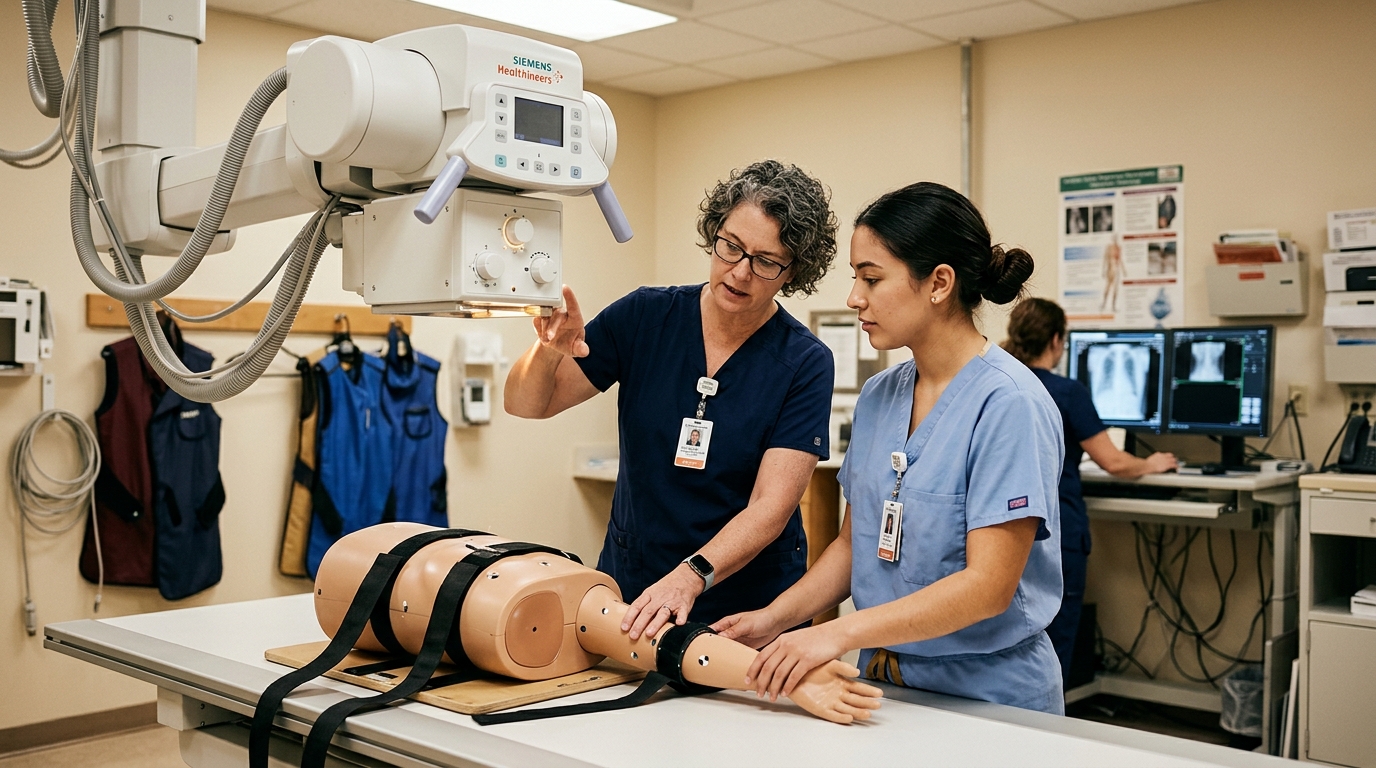
I want to tell you about the worst moment in my twenty years as an imaging department manager. It was 2012. I had a young rad tech—let's call her Sarah—who'd been with us for about eight months. Solid tech. Good attitude. Had just gotten her CT certification and was really coming into her own.
One day she asked if she could talk to me privately. Took me to the break room. Started crying. Said she felt invisible. Said the senior techs barely talked to her. Said she wasn't sure how much longer she could keep coming to work feeling like she wasn't part of the team.
I was floored. From my perspective, she was doing great. But from her perspective? She was working in an environment where nobody was really invested in her success. I thought showing up, giving her a paycheck, and letting her learn on the job was enough. It wasn't.
Sarah left three months later. Got a job at another hospital where—and I'm being honest—there was nothing better there except that someone decided to mentor her specifically.
That's when I realized our biggest problem wasn't hiring or compensation or even culture broadly. It was the absence of intentional mentorship. We had senior techs who'd been here forever, they knew everything, but we'd never asked them to transfer that knowledge to newer people on purpose. It just wasn't systematized.
So I built a mentorship program. Not fancy. Not complicated. But intentional. And it changed everything.
Why Mentorship Matters More Than You Think
Here's what I understand now that I didn't then: starting a new job is isolating. You're learning new systems, new people, new protocols. You're stressed. You're probably still learning basic competencies. And if nobody's specifically invested in helping you navigate that—if you're just sort of figuring it out in the margins—you feel it.
Mentorship fixes that. When a senior tech is specifically assigned to help you, several things happen:
You learn faster. Mentors know the shortcuts, the common mistakes, the way to do things efficiently. They can teach you in ways that written protocols can't. There's context.
You feel valued. Someone important is spending time on you. That sends a signal. It says, "We think you're worth investing in."
You integrate into the culture faster. Mentors introduce you to people. They explain the social dynamics that aren't in any handbook. They make you part of the team, not just someone who works in the building.
You stay longer. This is the concrete part. Studies on mentorship in healthcare consistently show that employees with mentors stay longer, are more satisfied, and reach competency faster. Our data backed that up. Mentored new hires stayed an average of 4.2 years. Non-mentored hires averaged 2.1 years. That difference is massive in terms of retention costs and institutional knowledge.
Building a Mentorship Structure That Actually Works
This is where a lot of places stumble. They say "we believe in mentorship" and then don't build the infrastructure for it. So mentorship happens haphazardly, or it doesn't happen at all.
Here's what I did:
Step One: Get leadership buy-in and make it official. Mentorship couldn't be something mentors did in their spare time. It had to be a formal expectation. Senior techs needed to know that mentoring was part of their job. They got a small stipend ($2,000 annually in my case) and explicit time allocation—I didn't count all of their mentoring hours as productive imaging time. This mattered. It said mentorship was valuable, not just something that was nice.
Step Two: Recruit the right mentors and match them carefully. Not every senior tech is a good mentor. Some are brilliant but impatient. Some are great with people but less technically rigorous. I started by asking senior techs if they wanted to be mentors. I didn't assign it. I got volunteers. Then I had conversations about what good mentoring looked like.
For matching, I tried to pair new hires with mentors who had some relevant strengths. If you were a young person starting out, I'd match you with a tech who was good with newer people. If you were career-changing, maybe someone who'd come from a different field. If you were pursuing a specific certification like CT or MRI, ideally a mentor with expertise there. The matching didn't have to be perfect, but thoughtfulness mattered.
Step Three: Develop a structured mentorship plan. I created a one-page document for each mentorship pair. Nothing heavy. But it outlined expectations: how often they'd meet (at minimum weekly, ideally more), what they'd focus on in the first month, second month, etc.
First month: operations, PACS, basic protocols, department culture. Second month: deeper protocol understanding, troubleshooting, equipment operation. Third month: independent work with feedback, starting to lead own workflow. Months four-six: increasing independence, skill refinement, certification prep if applicable.
This structure let mentors know what they were supposed to be doing instead of just "help them learn."
Step Four: Create accountability and communication. I had one-on-one check-ins with mentors monthly for the first three months of each mentorship. How's it going? What challenges are you seeing? What's the mentee struggling with?
These conversations weren't about me managing mentors. They were about supporting them. Sometimes I'd help problem-solve a challenging situation. Sometimes I'd connect mentors with resources. Mostly I was just listening and making sure the mentorship was actually happening and going well.
Step Five: Mark the transition. After about three months, the mentee transitioned to being independent while still having access to the mentor. But we formalized that transition. Had a little conversation. Acknowledged the work the mentor did. Shifted the dynamic from "I'm teaching you everything" to "I'm here to support you as you work more independently."
Then at six months, we had a final check-in. How did the mentorship go? What worked? What didn't? And the mentee could provide feedback to the mentor. This was important—it told mentors that their work mattered and that we cared about doing it well.
What Made the Difference
I want to be honest about what I expected versus what actually happened.
I expected faster competency development. We got that—newer techs were independently operating with confidence within three months instead of six.
I expected better retention. We definitely got that. Sarah's story wouldn't happen now.
What surprised me was how much it transformed the culture. Senior techs took their mentoring seriously. They started thinking about how to teach, not just how to do. New techs felt genuinely welcomed. And mentors reported that they actually enjoyed it. One senior tech told me, "It makes me feel like I have a purpose beyond my own work."
Also unexpected: improvement in image quality. When mentors are specifically teaching newer techs about protocol optimization, technique, and positioning, the whole department gets better. It wasn't just that new techs improved—the mentoring conversations elevated the entire team's thinking about what quality looked like.
Common Mistakes to Avoid
After getting this running, I learned what didn't work:
Don't assign mentoring randomly. "Jane, you've been here five years, you're mentoring the new guy." Jane might hate it. The new guy might not gel with Jane. Make it voluntary and thoughtful.
Don't make it informal. Without structure, people aren't sure what they're supposed to be doing. "Help them learn" is too vague. "Meet weekly, focus on protocol understanding this month" is clear.
Don't neglect the mentors. They're doing extra work. Acknowledge it. Support them. Solicit feedback. Let them know what they're doing matters.
Don't assume it fixes everything. Mentorship is powerful for integration and learning. It's not a magic fix for bad hiring decisions or unrealistic workloads. Make sure you're hiring the right people and not burning everyone out. Mentorship helps, but it's not a substitute for reasonable expectations.
Don't stop checking in. Month one of mentoring is great. But if you're not checking in at months three and six, mentorship can fade. The relationship matters, but intentionality matters more.
The Specific Things Mentors Actually Teach
I want to be concrete about what happens in good mentorships, because it's not obvious.
Yes, mentors teach technical skills. How to acquire an image, how to troubleshoot equipment, how to read the EMR.
But they also teach the stuff that doesn't get documented:
- How to handle a difficult radiologist.
- When to ask for help versus when to figure it out yourself.
- How to manage a long shift without burning out.
- Which break room you can actually use without judgment.
- How the department's politics work and who's in the room.
- Why this hospital prefers this technique over that one (even if both are acceptable).
- How to balance attention to detail with efficiency.
That last one is critical. A new tech often doesn't understand the balance. They'll take forever to get a perfect image, or they'll rush and get a mediocre one. A mentor can help them find the middle ground. That's invaluable.
Implementation Timeline
If you want to build this:
Month one: Get buy-in from leadership. Recruit mentors. Match mentors with new hires.
Month two-three: Start mentorship relationships. Have regular check-ins. Refine based on what you're learning.
Month four-six: Let relationships develop. Keep checking in with mentors. Start collecting feedback.
Month seven onwards: Formalize the transition to independence. Assess what's working. Refine based on experience.
You don't have to get it perfect from day one. I didn't. But starting and iterating is way better than not starting at all.
The Outcome
We tracked it over three years. Mentored new hires: 78% stayed longer than two years. Non-mentored new hires: 42% stayed longer than two years.
Average time to independent competency dropped from six months to 3.5 months.
Department engagement scores improved. People felt more connected to the team. Senior techs reported higher job satisfaction because they had a purpose beyond imaging.
And most importantly, from a patient care perspective, image quality was more consistent. When you're deliberately teaching people to think about protocols and technique, the whole department elevates.
That's what a real mentorship program delivers. Not just faster onboarding or lower turnover, though both of those are real. But a stronger culture. People who feel invested in. A team that actually functions like a team.
That's worth building.
Related Articles

Burned Out as a Rad Tech? Here's How to Reignite Your Career
April 23, 2026

Managing Up: How Rad Techs Can Influence Department Decisions
April 22, 2026

How to Compete With Travel Agency Pay Without Breaking Your Budget
April 22, 2026
Quality Assurance in Radiology: Why QA Culture Affects Retention
April 21, 2026