How to Transition From Hospital to Outpatient Imaging
I made the jump from hospital radiology to outpatient imaging about six years ago, and it was honestly one of the best decisions I've made in my 18-year radiology career. But I'll be real with you—it's not a simple "better" or "worse" choice. It's a different choice, and whether it's right for you depends on what you value most.
Since then, I've worked as a career coach for rad techs in our local ASNRT chapter, and I've walked at least fifty technologists through this exact decision. Some thrived in outpatient settings. Others realized pretty quickly that hospital culture was actually what they needed. Both outcomes are totally valid. What matters is going in with your eyes open.
Why Techs Leave Hospitals for Outpatient Imaging
Let me start with the honest truth: most of the techs I've coached who leave hospital settings are running toward something, not just running away. Yes, hospital burnout is real—I felt it too—but the draw to outpatient imaging is usually more nuanced than just "I'm exhausted."
The first thing you notice about hospital work is the pace. It's relentless. You're juggling emergency calls, trauma patients, a constant stream of inpatients, and that underlying anxiety that your census could spike any minute. When I was working in-hospital MRI, I rarely took my full lunch break. There was always someone who needed the machine, or a stat that came through, or a patient who needed help. The machine didn't care that I'd been there for nine hours already.
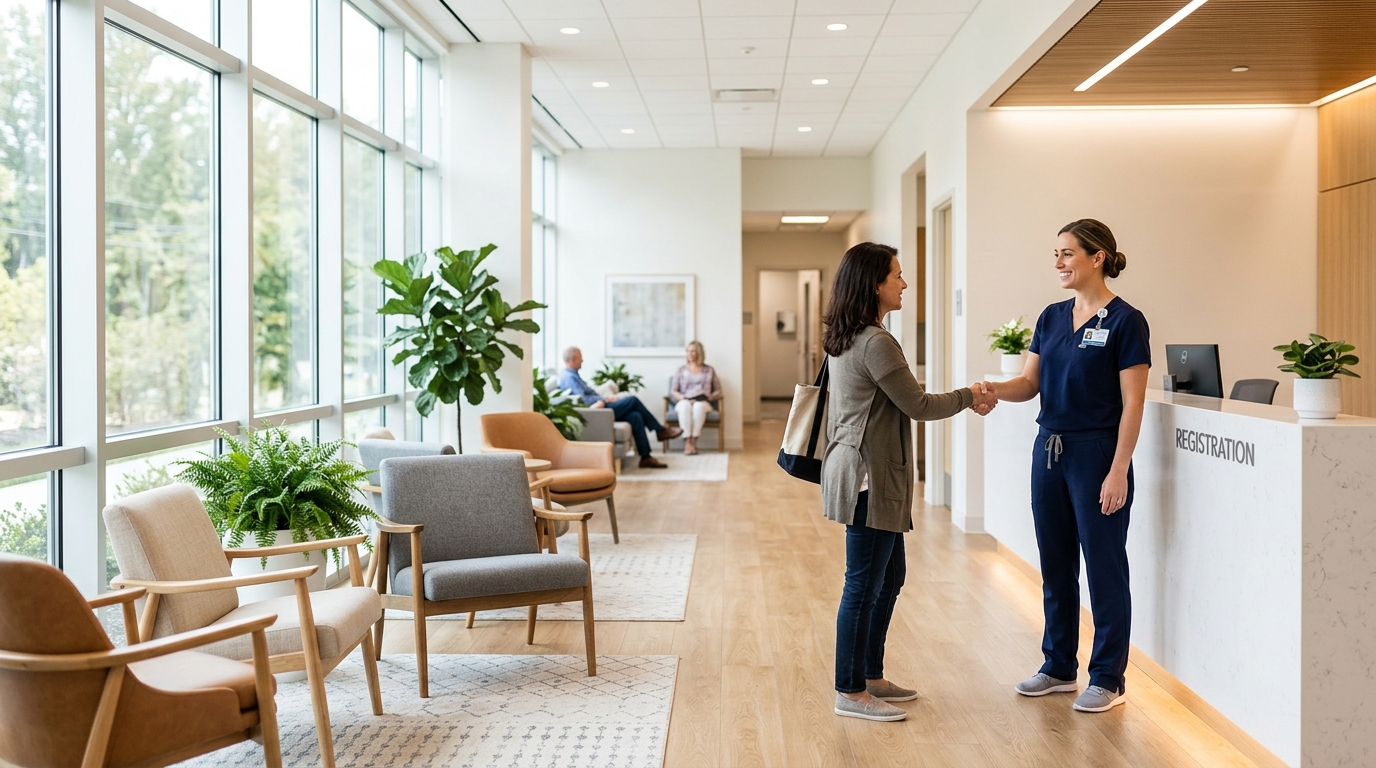
Outpatient imaging? Different beast entirely. You have scheduled appointments. People show up at 2 PM for their 2 PM appointment. There's still urgency—someone always needs their results—but there's predictability. That matters more than I expected it to.
The second big draw is autonomy. In most hospitals, you're part of a massive machine. You follow protocols. You work within a hierarchy. Someone else is managing your schedule, your priorities, your day. In many outpatient clinics, especially smaller ones, you have way more say in how your day runs. You might help decide which imaging protocols to use. You might have input on scheduling. You might actually see the ripple effects of your suggestions. That ownership feels good.
What Actually Changes (And It's More Than You Think)
Here's where I need to be straight with you: the transition isn't just about a lighter schedule. Several fundamental things shift.
The Variety Factor
Hospital radiology throws everything at you. You scan trauma patients in their gowns, post-op patients on stretchers, ICU patients who can't move off their beds. You're troubleshooting equipment that's maxed out and worn out. You're dealing with patients in every possible emotional state—scared, angry, confused, medicated, unmedicated.
Outpatient imaging is more focused. You're doing the same types of scans, on patients who mostly scheduled well in advance, in a controlled environment. If you loved the variety of hospital work, this could feel monotonous. If you hated the chaos, this feels like heaven.
I actually found this transition harder than I expected. I thought I'd miss the variety, but I didn't. What I did miss was the sense of mission—the feeling that I was part of something critical happening. You adjust to that, but I want you to know it's a real adjustment.
The Autonomy Shift
You want to stay an extra thirty minutes with a nervous patient to make sure they understand what's happening? Outpatient setting, you might be able to do that. Hospital MRI? You've got five more patients waiting, and bed management is breathing down your neck.
But that autonomy comes with a catch. In hospitals, if something goes sideways, there's an entire infrastructure backing you up. The radiologist is right there. There's nursing support, security, respiratory therapists. In smaller outpatient clinics, you might be more on your own. Not completely—you'll have radiologists, support staff—but the backup system is smaller.
The Community Feeling
Hospitals are bigger. You might know your MRI techs, but you might never meet the CT department. You're a small piece of a massive operation. Outpatient clinics tend to be tighter groups. You actually know the front desk staff's names. You remember patients because they come back. You see the people you work with as people, not just "the day shift crew."
This is wonderful if you value community at work. If you're someone who prefers to keep work professional and separate from your personal life, hospital culture might suit you better.
The Money Conversation
Nobody wants to feel like they're taking a pay cut for better hours. Let me give you the real picture.
Most outpatient imaging positions pay 5-12% less than equivalent hospital positions. I went from making $58,000 at the hospital to making $54,000 at my first outpatient clinic. That hurt initially. But here's what I didn't account for in my initial math:
- I'm not paying for emergency childcare anymore because I'm off by 6 PM most nights
- I'm not spending $300/month on my last hospital job's night-shift coffee and late-night food
- I'm not burning out and needing therapy to process work stress (yes, I'm serious)
- I'm sleeping better, which meant fewer doctor visits for stress-related issues
Over time, I also negotiated better. By year two, I was at $57,000. By year four, I was making $61,000. Outpatient clinics are often privately owned or smaller organizations. They have more flexibility in compensation if you prove your value.
The signing bonuses and retention bonuses that hospitals are throwing around right now? You won't find those at outpatient clinics. That's one tradeoff.
Skills That Transfer (Pretty Much Everything)
Here's the good news: your clinical skills transfer perfectly. If you're a great MRI tech, you're a great MRI tech whether you're in hospital or outpatient. Your ability to position patients, troubleshoot equipment, communicate with anxious patients—none of that changes.
What does change is emphasis. In hospital settings, you're often managing the technical side intensely. In outpatient, you might spend more time on patient education and comfort. You're not rushing as much, so patient communication becomes more central to your work.
Skills You'll Need to Build
The one area where you might struggle: flexibility on equipment. Big hospitals often have multiple versions of machines, protocols that vary by unit, workarounds for equipment issues. Smaller outpatient clinics usually have one or two machines per modality. You become very efficient with that specific machine, which is great—but sometimes that means less exposure to newer technology.
If you're someone who loves learning new equipment and techniques, you might need to seek out professional development opportunities outside work to scratch that itch.
Making Your Transition Decision
After coaching so many techs through this, here's what I ask myself about candidates:
What's driving you away from your current job? If it's the pace and schedule, outpatient is probably perfect. If it's professional frustration or feeling undervalued, fix that first before you move.
What are you looking for? Better hours? Consistent schedule? More autonomy? Less chaos? All of these point toward outpatient. Intellectual stimulation? Variety? High-acuity work? Maybe stay in hospital.
Can you financially absorb a 5-10% pay cut in year one? Be honest about this. If you're stretched thin, the pay difference matters more than it might seem.
How long do you want to stay? Outpatient is great for someone building a sustainable long-term career. If you're considering major changes in 2-3 years, factor that into your planning.
The Real Talk
My transition was one of the best moves I made. I found a clinic where I genuinely enjoy working, where I'm appreciated, and where I can actually remember what it feels like to not be exhausted. That matters.
But I want you to make this choice for the right reasons. Don't leave hospital work because you're burned out this week. Fix the burnout first. Then decide if outpatient is actually what you want, or if it's just what you wanted to escape.
The good news? Both hospital and outpatient settings need excellent radiology technologists. Whether you transition or stay, make sure you're choosing actively, not just reacting.
You've got this. And whatever you choose, know that the skills you've developed as a rad tech are valuable everywhere in this field.
Related Articles

Burned Out as a Rad Tech? Here's How to Reignite Your Career
April 23, 2026

Managing Up: How Rad Techs Can Influence Department Decisions
April 22, 2026

How to Compete With Travel Agency Pay Without Breaking Your Budget
April 22, 2026
Quality Assurance in Radiology: Why QA Culture Affects Retention
April 21, 2026