How Hospital Reputation Affects Your Ability to Recruit Rad Techs
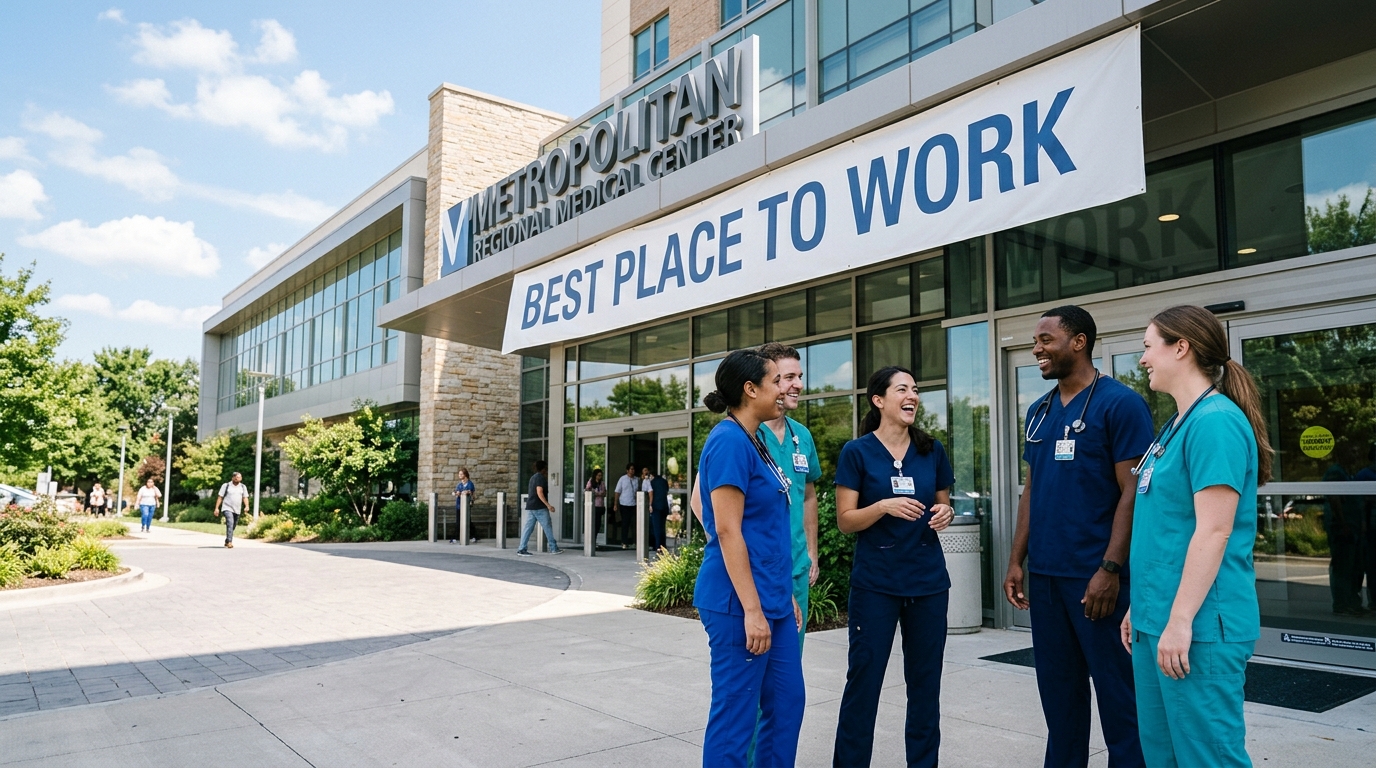
I've managed the imaging department at three hospitals in my career, and I can tell you with absolute certainty that reputation is the single biggest factor in whether you can attract talented radiologic technologists. Not salary. Not benefits. Reputation.
I learned this the hard way at my second hospital, where I inherited a department with a terrible reputation in the local radiology tech community. We were posting positions that stayed open for six months. Not exaggerating—six months. Meanwhile, a hospital 15 minutes away was getting 47 qualified applications for a single PRN position. The difference? One hospital was known as a place where techs actually wanted to work. The other was considered a stepping stone or, frankly, a last resort.
How Reputation Actually Kills Recruitment
Before I get into solutions, I want to be very clear about how this plays out in practice because it's not always obvious to hospital leadership. When you have a poor reputation, qualified applicants simply don't apply. They know someone who used to work there. They've heard stories. They've read comments on Glassdoor or Facebook. And they move on to the next opportunity before you ever get a chance to make your pitch.
At my second hospital, we had a nursing turnover rate of 32% annually. That's catastrophically high. And that reputation didn't exist in a vacuum—it was being actively reinforced by current staff who were leaving and telling everyone exactly why. The imaging department was particularly hard hit because word travels fast in the radiology tech community. It's a relatively small field, and people know people.
The concrete impact: my job postings would get maybe 3-4 applications per opening, and of those, maybe one would be qualified. Compare that to the hospital down the road where they were getting 15-20 applications per opening, with 12-15 of those being solid candidates. The math on that is devastating when you're trying to staff a department.
The Real Drivers of Hospital Reputation
So what actually drives reputation? It's not what hospital leadership thinks it is. It's not, primarily, about salary or benefits packages. Don't get me wrong—competitive pay matters. But I've seen hospitals with excellent compensation struggle to recruit because their reputation was in the gutter.
The reputation drivers I observed during my 20 years were clear and consistent: leadership stability and actual caring, equipment quality and modernization, staff safety and support, scheduling fairness, and whether the hospital invested in professional development.
Take leadership stability first. At my third hospital, we had the same chief of radiology for 14 years and the same imaging director (me, eventually) for the last 8 years. Staff knew where they stood. They knew their concerns would be heard. Turnover was 6% annually—I could actually plan staffing because people stayed. Compare that to my second hospital, where we went through four different imaging directors in six years, each with a completely different management philosophy. People left because they didn't trust the direction of the department. How could they plan their careers?
Equipment matters more than people realize. When I was at the first hospital, we actually had decent imaging equipment, and techs took pride in working with current technology. At the second hospital, we were running a PACS system from 2008 well into 2020. CT scanners from 2006. The MRI was held together with prayers and overtime. Our techs were frustrated constantly—not because they didn't like the work, but because they were fighting with broken equipment. That frustration leaked out into the community. People heard, "Oh, don't go work at County Hospital, their equipment is ancient."
The Vicious Cycle of Bad Reputation
Here's where it gets genuinely nasty. Bad reputation creates a cycle that's hard to break. You can't attract good staff, so you end up hiring people who maybe aren't as qualified or professional. Those people are harder to manage, they struggle more with the work, which leads to worse patient outcomes, which hurts the hospital's reputation even more. Meanwhile, your existing good staff are demoralized because they're covering for weaker team members. So they leave too.
At my second hospital, I watched this play out in real time. We hired someone with minimal experience out of desperation. They struggled with basic positioning. They had a difficult personality that caused friction. The hospital's reputation took another hit, which made it even harder to attract the next person. The good people I did have started actively looking elsewhere because they were tired of being short-staffed and having to pick up slack.
It took three years to reverse that trajectory, and honestly, we never fully recovered during my tenure there. Some reputations are just too damaged.
How to Actually Fix It
The good news? I've seen hospitals successfully rebuild their reputation, and it's not magic. It requires consistent effort and genuine change, not just marketing spin. Here's what actually works:
Start with leadership. Make it stable and visibly invested. If you're the hospital CEO or administrator trying to attract rad techs, you need a consistent imaging leadership team. And that leadership needs to demonstrate that they actually care about the people working in the department. This means being present in the department, listening to concerns, and following through on commitments. When I became director at my third hospital, I spent the first month just walking around talking to staff. Not inspecting. Not evaluating. Just listening. That signaled to people that things might actually change.
Modernize your equipment. You don't need the newest scanner on the market, but your equipment needs to be functional and relatively current. This is one of the few things where you need to spend money. There's simply no way around it. If your CT scanner is 15 years old, you're going to struggle to recruit. Techs want to work with modern equipment because it makes their job easier and they take professional pride in their work. When you invest in equipment upgrades, you're signaling that the hospital believes in the imaging department.
Address scheduling immediately. This was something we changed right away at my third hospital, and it had outsized impact on recruitment and retention. We created a transparent scheduling system where staff could see their schedule 8 weeks out. We honored requests when possible. We didn't punish people for needing time off. We treated scheduling like something that should work for the people who live those lives, not like something they should just accommodate.
Seriously—bad scheduling kills retention and reputation faster than almost anything else. Rad techs have families. They have lives. When a hospital treats scheduling like an administrative task to be optimized without regard for human beings, word gets out, and suddenly you're only getting applications from desperate people.
Invest in professional development. This costs money, but not as much as constantly recruiting and training new people. At my third hospital, we paid for techs to get additional certifications. We sent people to conferences. We created learning opportunities within the department. When the imaging community saw that hospital investing in their staff, the reputation shifted. People wanted to work somewhere that valued their growth.
Be transparent about problems and share solutions. At my first hospital, when we had equipment failures, leadership communicated about it. "Our MRI is down this week, here's our timeline for getting it fixed, here's how we're covering coverage." People responded to that honesty. At my second hospital, problems were hidden or downplayed, which just made people feel like leadership didn't care and wasn't being straight with them.
What This Looks Like in Recruitment
When I took over recruiting at my third hospital, we started actually talking to candidates about what we'd changed. Not in a defensive way, but straightforwardly: "We had some challenges here, here's what we're doing about it, here's where we're investing." That honesty, combined with actual visible improvements, started attracting a better pool of candidates.
Within 18 months, our job postings were getting 12-15 qualified applications instead of 3-4. Our interview-to-hire ratio improved. We hired people who actually wanted to be there, not just people who were desperate for any job.
More importantly, turnover dropped. People stayed. The department stabilized. Patient outcomes improved because staff weren't constantly turned over and demoralized.
The Numbers That Matter
Let me put some actual numbers on this. The cost to recruit and train a new rad tech is approximately $15,000-$20,000 when you factor in recruiter fees, training time, and onboarding. When you're turning over staff at high rates, you're bleeding money. A 32% turnover rate in a 25-person department means you're replacing 8 people annually. That's $120,000-$160,000 in direct recruitment and training costs per year.
Compare that to the cost of fixing reputation problems: equipment upgrades ($500,000-$2,000,000 depending on what you're replacing), better scheduling systems (often free with better management), professional development budgets (maybe $5,000-$10,000 per year per person), and leadership stability (just don't rotate out good directors).
The return on investment is massive when you look at it that way. Spend money fixing what's actually broken instead of constantly trying to recruit your way out of bad decisions.
Final Advice for Hospital Leadership
If you're struggling to recruit rad techs, the answer is almost certainly not a bigger signing bonus. The answer is figuring out why your reputation is poor and fixing the actual problem. Go ask the techs you do have why they stay. Go ask the ones who left why they left. Be prepared for honest feedback that might be uncomfortable.
Then commit to real change. Not public relations change. Real, operational change. Modernize your equipment. Stabilize your leadership. Fix your scheduling. Invest in your people.
When you do that, recruitment becomes easy. You'll actually get to choose from a pool of qualified candidates instead of hoping someone applies. Your department will stabilize. Your outcomes will improve. And your reputation will rebuild naturally because people will genuinely want to recommend you as a place to work.
I've seen it happen. It's possible. It just requires admitting that the problem isn't your marketing campaign—it's something you actually need to fix.
Related Articles

Burned Out as a Rad Tech? Here's How to Reignite Your Career
April 23, 2026

Managing Up: How Rad Techs Can Influence Department Decisions
April 22, 2026

How to Compete With Travel Agency Pay Without Breaking Your Budget
April 22, 2026
Quality Assurance in Radiology: Why QA Culture Affects Retention
April 21, 2026