Building Your Personal Brand as a Radiology Professional
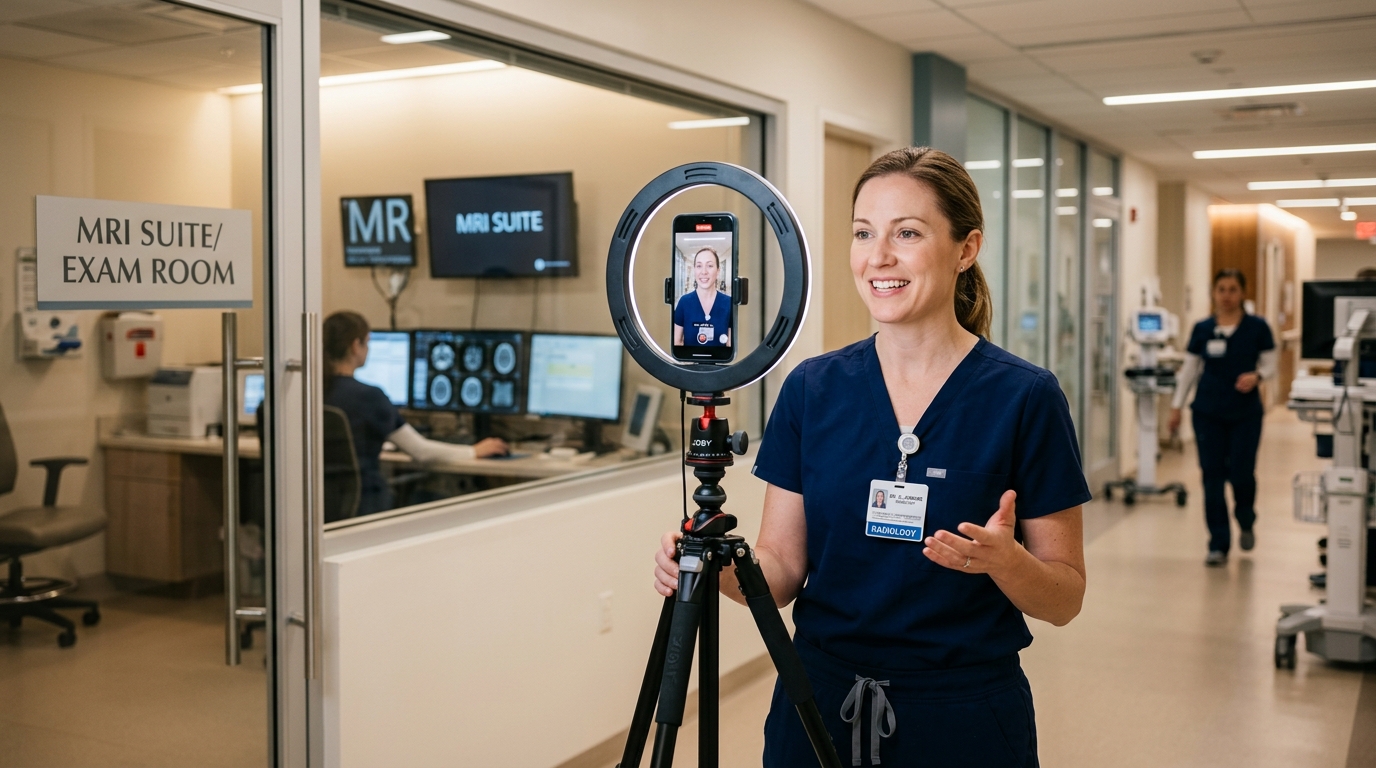
Five years ago, I was the guy working travel contracts. I did it for the freedom, the adventure, the ability to pick up six-month assignments in places I'd never been. Portland, Phoenix, Miami, back to Atlanta—I saw the country, made decent money, and had the flexibility to disappear when things got boring.
But I was invisible.
No one knew my name beyond my current assignment. I wasn't building anything. Every time I left a facility, I basically started from zero reputation-wise at the next place. Looking back, I realized I was treating my career like a series of transactions instead of something I could actually shape.
Then I made the shift to a staff role and—more importantly—started thinking strategically about my personal brand. That decision changed literally everything about my career trajectory and income potential. And I'm not talking about becoming an Instagram influencer or whatever. I mean being intentional about how I present myself professionally and what I become known for in radiology.
What Personal Brand Actually Means In Radiology
Let me be real: when I first heard the term "personal brand" in a professional context, I thought it was nonsense. Like something for marketers or celebrities, not for us. We're radiology technologists. We put patients on tables, run protocols, ensure image quality. That's the job, right?
But then I realized personal brand is just another way of saying reputation. What do people think of when they think of you professionally? What are you known for? Are you the MRI tech who really understands safety protocols? The CT technologist who explains procedures so patients aren't terrified? The educator who actually mentors people? Or are you just... that tech who shows up and does the job?
The difference between a rad tech who's just doing their job and a rad tech who's building a brand is intentionality. It's about being deliberate about your strengths, communicating them, and creating opportunities that align with your actual expertise and values.
When I was traveling, I was good at what I did. But nobody knew I was good at it. I was anonymous. As soon as I decided to stop being anonymous, doors started opening—positions I'd never have qualified for before, opportunities to lead, chances to shape how other techs thought about the field.
Start With Your Actual Strengths (Not What You Think You Should Be Good At)
Here's something that took me embarrassingly long to figure out: your personal brand needs to be grounded in something real.
I spent the first year of my staff role trying to position myself as this generalist expert in all modalities. I'd done travel contracts in CT, MRI, radiography, interventional radiology—the works. I thought that was my brand. Turns out, it was just confusing. I wasn't known for being great at anything specific.
Then I had coffee with a manager who'd worked with me at one of my travel assignments. She said something I needed to hear: "You're the best at explaining why we do what we do to other techs. People get it when you teach it. That's your thing. Stop pretending you're equally strong everywhere."
That was the breakthrough. I'm not equally skilled across all modalities. But I am genuinely good at training, at understanding why protocols matter, at breaking down complex concepts for newer technologists. That's where my strength actually is—the education and mentorship side, not just the technical execution.
So that became my focus. I started saying yes to opportunities to mentor. I volunteered to create training materials. I presented at the regional ARRT conference about continuing education in imaging. I wasn't doing anything revolutionary—I was just being deliberate about building visibility in the area where I actually had real strength.
Within two years, I went from being an anonymous travel tech to being the guy local facilities called when they needed staff training or had education gaps. That shift opened completely different career paths.
Your brand needs to be built on something authentic. Figure out what you're actually good at and what you actually care about, not what sounds impressive.
Make Yourself Visible (Within Your Professional Circles)
Building a personal brand doesn't mean you need to become a public figure. It means being visible within the professional circles that matter to your career.
For radiology professionals, that looks like a few specific things. First, it's ARRT. Continuing education isn't just about maintaining your license—it's about being part of the professional conversation. I started attending local ARRT chapter meetings. Not every month, but regularly enough that people recognized me. I eventually joined the leadership team. This wasn't about getting a fancy title; it was about being visible to other rad techs and showing I was invested in the profession beyond just getting a paycheck.
Second, it's your workplace. Be the person people notice. When there's a difficult patient situation, how do you handle it? When a new protocol comes down, do you learn it and help others understand it, or do you just do your thing? Do you show up to professional development opportunities, or skip them? The small choices about how you show up at work create a reputation.
Third, and this is newer for our field but increasingly important, is online presence. I'm not saying you need to start a podcast, but having an updated LinkedIn profile where you're positioning yourself as an educator in imaging? That matters. I've had facilities reach out to me directly because they found me on LinkedIn and saw that I was actively engaged in conversations about radiology technologist development and workforce issues.
When I was traveling, my LinkedIn said basically nothing. It was like a ghost profile. Now it's an actual representation of what I do and what I care about. That makes a difference.
Create Content (Even If It's Just In Your Own Department)
This was the hardest shift for me mentally, because it felt presumptuous. Me, creating content? Writing about radiology?
But content doesn't mean publishing a book or writing for major journals. It means sharing your knowledge in accessible ways. I started doing this in really small ways at my facility. I created a simple one-page checklist for new techs about MRI safety. I wrote a couple of quick guides about common CT protocol questions. Nothing groundbreaking. Just taking knowledge I had and making it shareable.
That stuff got passed around. People started asking me more questions. Other departments wanted the materials. It created a reputation: James is the guy who knows this stuff and can explain it clearly.
Eventually, this led to guest articles, speaking opportunities, and conversations with other rad techs about what we're seeing in the field. But it all started with just being willing to organize and share knowledge I already had.
You don't need to be a published author to build a brand. You need to be someone who shares what they know and helps others get better at their jobs. In radiology, that's genuinely valuable. Imaging is complex. Most facilities are desperate for experienced techs who can actually teach newer ones. If you position yourself as someone who does that, you become irreplaceable.
Be Strategic About Opportunities
Once you start being visible, opportunities come. Your job is to be thoughtful about which ones you take.
I got asked to do presentations, to mentor other techs, to consult on training programs, to sit on committees. I couldn't and didn't do all of it. But I was strategic. I said yes to things that either (a) aligned with my brand as an educator and mentor, or (b) helped me build visibility in areas where I wanted to grow.
I said no to things that didn't fit. That meant turning down some lucrative consulting work early on because it would have diluted what I was building. It meant being selective about board positions and committee roles.
This is important: your personal brand gets muddled if you say yes to everything. You become a generalist again instead of someone known for something specific.
Your Brand Should Be Bigger Than Your Current Job
Here's something that took me a while to understand: your personal brand shouldn't be tied to your current employer. It should be about you as a professional in radiology.
When I was in my travel phase, I wasn't even thinking about this. I was just working contracts. But once I settled into a staff role, I realized that if my entire reputation was about being "the great educator at this hospital," that's limiting. What if I left? What if the situation changed?
Instead, I started building my brand around "someone who cares about developing the next generation of imaging professionals" and "someone who understands the educational side of radiology technologist workforce development." That's mine. That travels with me. It's not tied to any specific facility or job.
This matters for your career resilience too. If your whole professional identity is wrapped up in your current position, you're vulnerable. But if you're known for something—a skill, a way of working, an expertise—that's portable. You can take it wherever you go.
That's real security in a field like radiology where things change and facilities face challenges. You're not just the rad tech at Hospital X. You're someone who brings specific value wherever you work.
The Practical Next Steps
If you're reading this thinking, "Okay, this is interesting, but how do I actually start?" here's what I'd do:
First, get clear on your actual strength. Not what sounds good. What are you genuinely better at than most of your peers? What do people come to you for? What do you enjoy doing so much that you'd probably do some version of it even if they weren't paying you?
Second, signal that somehow. Update your LinkedIn. Join a professional organization. Volunteer for a project that uses your strength. Have coffee with someone you respect in the field and talk about what you're building.
Third, share knowledge. Write something down, even if it's just for your department. Create something that makes your expertise visible and useful to other people.
Fourth, be consistent. Don't do any of this sporadically. Show up regularly to the things that matter. Build reputation through actual presence and contribution over time.
It took me about two years to really shift from being an anonymous travel tech to being someone known for something. But when I look at where I am now compared to where I was—the opportunities, the income, the ability to influence how other rad techs develop—it's night and day.
And honestly, the work is more fulfilling too. It's not just about the technical skill of running protocols. It's about knowing that you're developing the next generation of imaging professionals, that you're contributing to the field, that your expertise actually matters beyond just one shift at one facility.
That's what a strong personal brand does. It turns your career from a series of jobs into an actual professional identity.
Related Articles

Burned Out as a Rad Tech? Here's How to Reignite Your Career
April 23, 2026

Managing Up: How Rad Techs Can Influence Department Decisions
April 22, 2026

How to Compete With Travel Agency Pay Without Breaking Your Budget
April 22, 2026
Quality Assurance in Radiology: Why QA Culture Affects Retention
April 21, 2026