How Small Hospitals Can Recruit Rad Techs Against Big System Competition
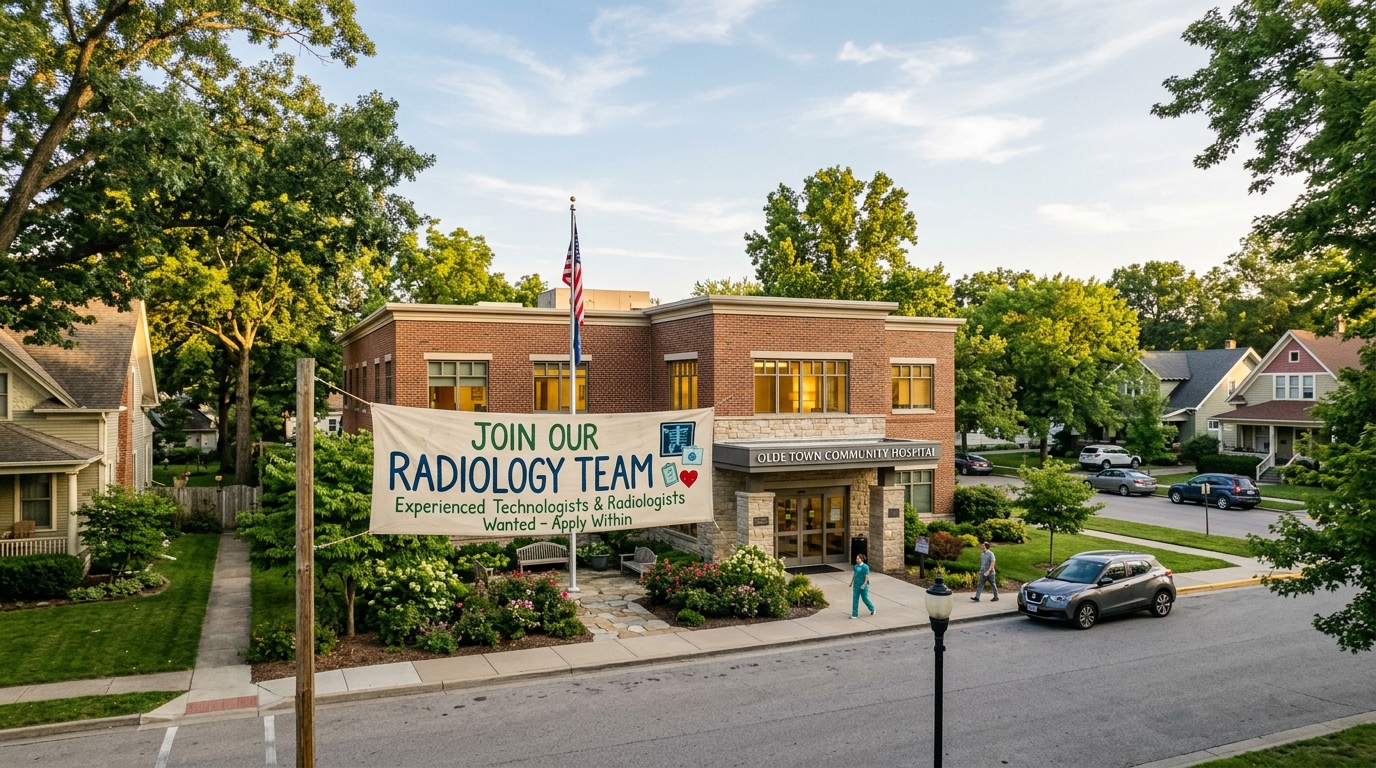
The Problem That Keeps HR Up At Night
Let me be direct: I spent twelve years as an imaging department manager at Mercy Community Hospital, a 250-bed facility in the Midwest, and I watched the recruitment landscape shift beneath my feet almost annually. When I started in that role back in 2011, finding and retaining good rad techs was manageable. By the time I left in 2023, it was like running against a wind that only got stronger.
The large health systems around us—the regional medical center thirty miles away with 800 beds, the academic hospital network an hour north—they had marketing budgets we couldn't touch. They could offer signing bonuses that looked like down payments on houses. They could promise tuition reimbursement that actually meant something substantial. They could tout state-of-the-art equipment and volume of cases that made every CV look better.
We didn't have any of that. We had a good team, solid clinical work, real relationships with physicians, and... not much else in terms of competitive ammunition.
So we had to get creative. And honestly? We won more than we lost. Not because we became big or fancy, but because we played to our actual advantages and stopped trying to beat the big systems at their own game.
The Advantages Small Hospitals Actually Have (And Should Leverage)
Here's what they don't tell you in healthcare management school: small hospitals have structural advantages that big systems struggle to offer, no matter how much money they throw at the problem.
Variety in daily work. At our 250-bed hospital, our imaging techs weren't specialists. You might do chest X-rays in the morning, assist with a fluoroscopy procedure at noon, cover the ER for imaging at 2 PM, and help with a mobile ultrasound in the ICU before your shift ended. One tech I worked with told me, "At Regional Medical Center, I'd scan the same anatomy all day. Here, I never get bored."
That variety is genuinely appealing to a significant portion of the tech workforce. Some people want depth in one area. Others want breadth. We had the breadth, and we marketed the hell out of it.
Direct relationships with radiologists and clinicians. In a small hospital, you're not a number in a department of 40 techs. Your radiologist knows your name. Knows your strengths. Asks for you specifically when something complex comes in. The surgeon you worked with three days ago actually acknowledges you in the hallway. That human connection matters more than most recruitment materials acknowledge.
Flexibility in scheduling. Big systems have rigid scheduling algorithms. We had a manager (me) who could actually talk to people about their needs. One of our best techs came back from retirement because I could offer him three twelve-hour shifts per week instead of the five-day commitment he'd need elsewhere. Another struggled with daycare logistics, and we found her a schedule that worked. We couldn't always say yes, but we could listen and problem-solve.
Proximity to home. This one is underrated. A tech working in our small-town hospital could often live in or near that same town. Partner's job there. Kids' schools there. Aging parents there. Big systems draw from wider geographic areas, which means commutes. We could genuinely say, "Keep your life in this community and work here."
Less bureaucracy. Need to implement a new protocol? We had a conversation, made a decision, and did it. Not a 47-email committee process. This appeals to people who are exhausted by red tape.
Meaningful impact. In a big academic center, you're part of an impressive operation. In a small hospital, you're essential. When staffing is tight and your department is stretched, you feel how much you matter. That sounds trite until you experience the difference.
These advantages are real. The challenge is that most small hospitals don't know how to market them.
The Recruitment Playbook That Actually Works
When I took over the imaging department at Mercy, we had been operating on the assumption that we just needed to post the job and wait. That changed completely once I recognized what we could actually offer.
Stop trying to match their compensation directly. We could never offer what the regional medical center could on base salary. So we didn't emphasize salary in our recruitment messaging. Instead, we emphasized the complete package: competitive salary (honest about where we stood), flexible scheduling, student loan repayment up to $5,000 annually (less visible than a signing bonus but valuable over time), continuing education stipend, and three weeks' PTO instead of the two-week standard.
The total package was competitive without bankrupting us.
Use current employees as your best recruiters. Every tech we hired who was good became a walking advertisement. We gave bonuses when they referred someone who was hired and stayed for 90 days. Word of mouth from "I actually work here and like it" is exponentially more powerful than any job posting.
Be honest about what you offer and what you don't. Our job posting said something like: "You won't find cutting-edge 3D imaging here, but you will find X, Y, and Z." Attracting the right people means being honest about what they're getting. A tech who loves variety and hates academic competition will thrive here. A tech who needs high-acuity trauma volume? Probably not the right fit. Better to know that upfront.
Create a genuine pipeline from programs. We built relationships with the radiologic technology program at the community college forty miles away. Offered preceptorships during students' clinical rotations. Hired a few of their graduates every year. Some of those students already knew us, knew our staff, and understood our culture before they even applied.
Leverage the community. Our hospital CEO made a point of being present in town. The imaging team sponsored a local 5K. We did school health fairs where techs talked about what they do. When prospective techs interviewed, they often already knew something about us from the community, which made the hospital feel more real and less like a faceless institution.
Make the interview process personal. Instead of a formal HR-led interview, ours involved meeting actual team members, seeing the department during a real shift, and talking to people who would become their colleagues. One candidate told me afterward, "I felt like I was joining a group of friends, not just getting hired for a job." That feedback is everything.
Creative Approaches to Compensation When You Don't Have Huge Budgets
We had to think differently about money. Here's what worked:
Tiered signing bonuses with clawback provisions. We offered $3,000 signing bonuses, but it was contingent on staying 18 months. If someone left before then, they had to repay a portion. Discouraged people taking the bonus and running to the next opportunity.
Tuition and certification reimbursement. Someone wanted to add CT certification? We'd cover it if they committed to staying. ARRT exam? We paid the fee. MRI specialty? We invested. This cost us maybe $8,000-12,000 per year total but made people feel invested in.
Shift differentials for less popular schedules. We couldn't compete on base salary, but we could offer 10% premiums for overnight shifts, weekends, and on-call work. Attracted people who actually preferred those schedules.
Health insurance contributions above standard. Instead of the state health plan minimum, we covered 85% of premiums. Bigger impact on people's actual lives than a slightly higher base salary.
Retention bonuses at anniversaries. One-time bonuses at the 1-year, 3-year, and 5-year marks. Not huge (usually $500-1,500), but symbolically important. Says we're investing in your staying.
Professional development time. Half-day monthly for someone to attend webinars, read journals, or work on a project relevant to their growth. Sounds small; it's enormously valued by professionals.
The Numbers (What We Actually Saw)
In my first year as manager, our turnover in the imaging department was 32%. That's brutal. It costs about $40,000 to recruit and train a new tech, so we were hemorrhaging money and continuity.
By year five, turnover was down to 12%, which is actually pretty good for healthcare. We'd stabilized enough that people knew each other, mentoring could happen, and new hires came in with realistic expectations.
We weren't getting the biggest names. But we were getting solid, stable, competent techs who stayed, who did their jobs well, and who helped us maintain a good clinical operation.
What I Wish I'd Known Earlier
Looking back, I'd tell any small hospital manager: Stop thinking of big systems as competitors. You're not competing on the same field. They have resources you don't. But you have culture, flexibility, and community impact they struggle to replicate.
Position your hospital as the choice for a different kind of tech. Not the tech who wants prestige and cutting-edge equipment. The tech who wants relationships, variety, and to actually know why their work matters.
Also, invest in your current team ruthlessly. Every tech you keep doesn't need to be recruited. Every tech who's happy tells their friends. Every tech who stays gets better at their job. The return on investment in retention is higher than the cost of recruitment.
And finally, be patient with the market. Building a stable imaging team takes time. We didn't fix our turnover problem in six months. We fixed it by consistently showing up, listening to what people needed, and doing what we could within our constraints.
The Bottom Line
I've moved on from hospital administration now, but I still stay in touch with people from Mercy's imaging team. Several of our techs have been there 8+ years. One is in a supervisory role now. They're not making what someone at the big academic center makes, but they're making decent money, they have the kind of work life that makes them happy, and they work with people they genuinely like.
That's not just good recruitment strategy. That's a sustainable operation.
If you're running a small hospital imaging department struggling to recruit, you have more tools than you think. You just have to use them smartly and lean into what makes you different, not what makes you smaller.
Related Articles

Burned Out as a Rad Tech? Here's How to Reignite Your Career
April 23, 2026

Managing Up: How Rad Techs Can Influence Department Decisions
April 22, 2026

How to Compete With Travel Agency Pay Without Breaking Your Budget
April 22, 2026
Quality Assurance in Radiology: Why QA Culture Affects Retention
April 21, 2026