The Real Cost of Unfilled Radiology Positions: What Every Imaging Director Needs to Know
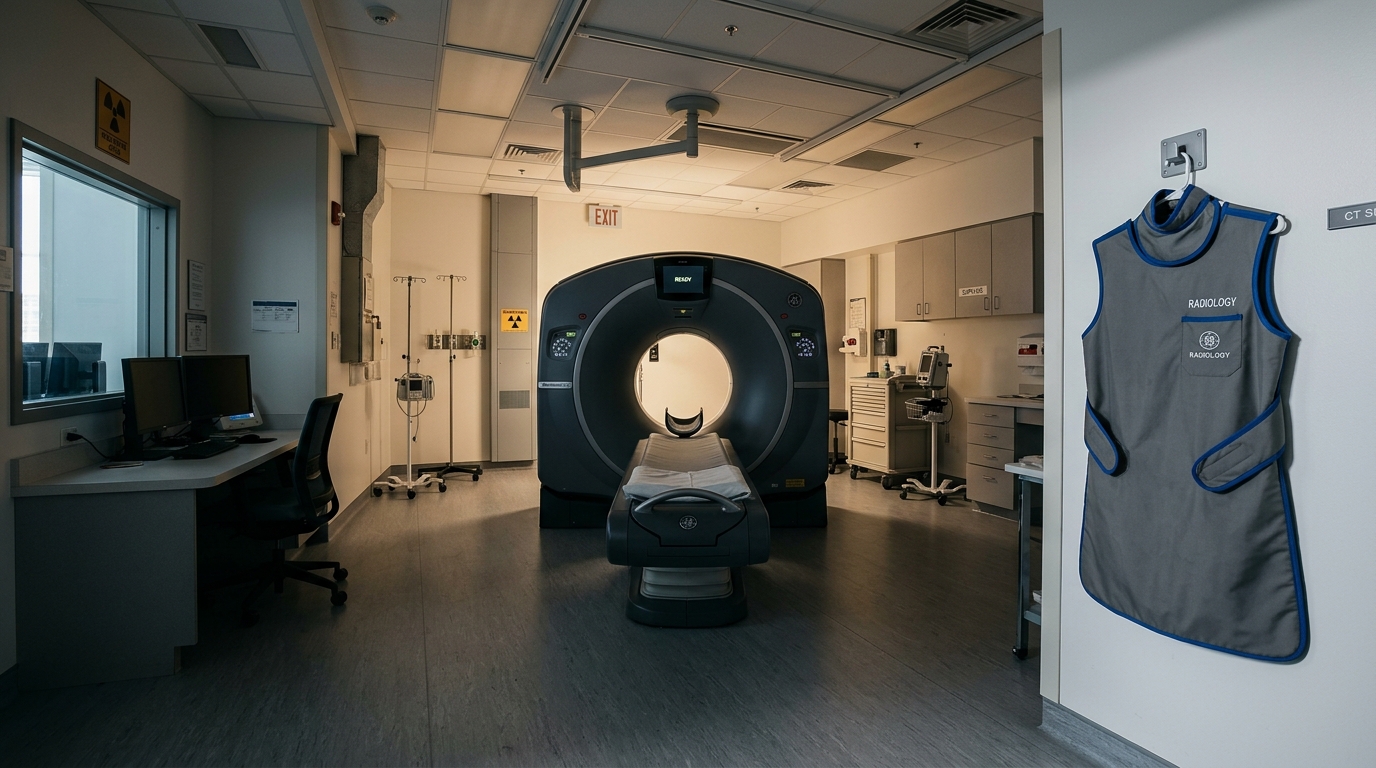
I've been on the floor of imaging departments for over 15 years, and I've watched the radiology tech shortage evolve from a temporary inconvenience into a genuine crisis. But here's what most hospital administrators and imaging directors don't fully grasp: that empty position on your staffing chart isn't costing you what your budget spreadsheet suggests. It's costing you far more.
The real cost of unfilled radiology positions extends far beyond a salary line item. It's the cascading effect of overtime payments, emergency staffing fees, delayed patient care, lost revenue, and the slow erosion of team morale that eventually drives your best people to leave. After watching this play out across multiple facilities, I can tell you with certainty: most imaging directors are severely underestimating the financial impact of every vacancy in their department.
This isn't speculation based on industry reports. This is what I've observed firsthand while hanging personal protective equipment on the same hook every day, watching colleagues work 12+ hour shifts, and seeing the quality of our work suffer because we're stretched too thin.
The Obvious Costs Everyone Overlooks: Overtime and Premium Labor
Let's start with what seems straightforward—the costs that should be easy to calculate but somehow get minimized in budget reviews.
When you have an unfilled rad tech position, someone has to cover that workload. Usually, it falls on your existing team. And when your existing team picks up the slack, you're paying overtime.
A full-time radiology technologist salary typically ranges from $60,000 to $75,000 annually, depending on experience, location, and specialty (CT, mammography, etc.). That's roughly $30 to $36 per hour at base rate. Add overtime premiums, and you're looking at time-and-a-half or double-time—$45 to $72 per hour for every extra shift your existing staff covers.
But overtime isn't your only expensive option for filling gaps.
Travel radiologic technologists command significant premiums. Facilities that contract travel techs are paying anywhere from $3,500 to $6,000 per week—often double or triple what you'd pay a permanent employee. Over 13 weeks, that's $45,500 to $78,000 for temporary coverage of a single position. And you're not even getting continuity of care; you're getting rotating faces who don't know your protocols, your radiologists' preferences, or your equipment quirks.
Then there are agency fees. Staffing agencies take their cut—typically 25-40% of the worker's hourly rate. So if you're paying $28/hour for a per-diem technologist, the agency is capturing $7 to $11 of that before your temporary worker sees a dime. Over months of extended vacancy, these agency costs compound quickly.
Real example from my experience: At a mid-sized hospital where I worked, we had one vacant CT position for eight months. During that period, the imaging director spent approximately $92,000 in overtime, travel tech contracts, and agency fees to keep the CT scanner operational. The actual annual salary for that position? $68,000. One vacant position cost nearly $24,000 more in temporary labor costs than paying a permanent employee would have cost. For eight months of coverage.
The Revenue Hemorrhage: Lost Imaging Volume and Throughput
Here's the piece that many imaging directors calculate incorrectly—and it's often the largest hidden cost of all.
When you can't staff your imaging department adequately, you don't just pay more for the staff you do have. You lose the ability to generate revenue from scheduled procedures.
An unfilled position directly reduces your imaging department's throughput. A full-time CT technologist might complete 8-12 exams per shift, depending on exam complexity and the facility's efficiency. At an average facility, CT exams generate between $800 and $2,500 in revenue depending on complexity, whether it's with or without contrast, and your regional reimbursement rates. MRI exams are often higher—$1,500 to $3,500 per scan.
Let's use conservative numbers: imagine each imaging technologist produces an average of 10 exams per shift, worth an average of $1,200 in net revenue. That's $12,000 in daily revenue generation per technologist.
If that position sits vacant, you're not just losing one technologist's worth of exams. You're losing exams because:
- You can't schedule patients efficiently when you lack capacity
- Existing staff are burnt out and working overtime, so they're less efficient
- Radiologists have to slow their reading pace because scans aren't coming through at normal volume
- Referring physicians send cases elsewhere when they face consistent delays
Over a year, one unfilled full-time position could represent $2.5 to $4 million in unrealized imaging revenue—far exceeding what that salary ever was.
But there's another angle that compounds the damage: insurance reimbursement penalties and quality metrics. When patients experience delays in imaging, some tests are canceled or rescheduled elsewhere. CMS metrics reward timely imaging completion. When your department's turnaround times balloon due to understaffing, you risk quality penalties and reduced reimbursement rates.
The Staffing Cascade: Burnout, Turnover, and the Multiplier Effect
This is where the costs become exponential.
When you have chronic understaffing, your existing team bears the load through mandatory overtime, extended shifts, and the constant pressure of knowing there aren't enough people to safely and efficiently handle the workload. I've lived this repeatedly—the guilt of asking a colleague already working 11 hours to stay another two, knowing their family is waiting.
This burnout doesn't just affect morale (though it absolutely does). It directly drives turnover. And turnover in radiology technologists is expensive.
The direct cost of replacing an employee—recruiting, interviewing, credentialing, onboarding training, lost productivity during the ramp-up period—typically runs 50-100% of that employee's annual salary. For a $70,000 position, that's $35,000 to $70,000 per person who leaves.
But the indirect costs are equally brutal. When your best, most experienced technologists burn out and leave because they're exhausted, your department loses institutional knowledge. The next cohort of technologists learns from less experienced people. Quality metrics slip. Safety incidents increase. And now you're facing not just a vacancy, but potentially damaged reputation in your talent pipeline.
I've seen imaging departments where chronic understaffing created a vicious cycle: one unfilled position led to burnout, which caused two experienced techs to leave, which created three new vacancies, which further stressed remaining staff, which caused more departures. What started as a single staffing gap became a department-wide crisis within 18 months.
The real cost of that first unfilled position? It wasn't just the vacancy itself—it was the downstream turnover it triggered.
Quality and Safety: The Costs You Can't Always Quantify
Here's what keeps me up at night as someone who's been in imaging for 15 years: unfilled positions directly impact the quality and safety of patient care.
When technologists are understaffed and exhausted, they make mistakes. Protocols are rushed. Positioning is compromised. Artifacts creep into images. Radiologists have to request retakes, which burns more department capacity and frustrates referring physicians.
These quality issues have costs:
Patient safety incidents and liability: When someone's exhausted, they're more likely to make a medical error. Dose management slips. Patient information gets mixed up. Depending on severity, these incidents can result in regulatory penalties, legal costs, and reputation damage.
Accreditation and regulatory compliance: Understaffed departments struggle to maintain accreditation standards. AABB, ACR, and other bodies have minimum staffing requirements. If you fall below them, you risk accreditation status—which means loss of reimbursement eligibility and inability to perform certain procedures.
Referred physician satisfaction: When imaging turnaround times extend and quality issues emerge, referring physicians lose confidence. They start sending cases to competing facilities. Even after you finally hire and adequately staff, it takes months to rebuild those relationships. Some never fully return.
I've worked in departments where chronic understaffing triggered a regulatory concern letter. The investigation, corrective action plans, and monitoring period cost far more than what it would have cost to hire adequate staff from the beginning.
The Recruitment Cost of a Bad Reputation
Understaffed departments develop reputations. Word travels in healthcare. Technologists talk to each other. Job review sites fill with complaints about mandatory overtime and unsafe staffing ratios.
When you finally go to recruit to fill those vacancies, you're swimming upstream. Candidates research your facility. They see that you've had an opening for six months. They hear stories from people who work there about burnout. They ask about staffing ratios in interviews, and they see hesitation in the hiring manager's answers.
You end up with weaker candidate pools. You have to offer higher salaries to attract people to a department with a bad reputation. You extend hiring timelines while candidates weigh risky decisions. And even when you hire, your new employees come in with lowered expectations and a cynical outlook.
The recruitment friction cost is real, even if it's hard to quantify in a spreadsheet.
The Administrative Burden: Scheduling, Compliance, and Coverage Logistics
Someone has to manage the chaos of covering unfilled positions. That someone is usually your imaging director or scheduling coordinator, spending hours each week:
- Arranging travel tech contracts and managing transitions
- Processing agency invoices and tracking premium labor costs
- Restructuring schedules to cover gaps
- Handling last-minute callouts because existing staff are fatigued
- Managing employee relations friction around forced overtime
- Maintaining compliance with labor regulations around consecutive shifts
This administrative overhead is a hidden cost. It's not billed to the department; it just consumes leadership time that could be spent on strategic initiatives, staff development, or process improvement.
What Does an Unfilled Position Actually Cost? The Real Math
Let me give you a concrete example from what I've actually observed:
Scenario: One unfilled full-time CT technologist position, six months open
- Overtime and premium labor costs: $46,000
- Travel tech and agency contracts: $38,000
- Lost imaging revenue (conservative estimate): $800,000
- Regulatory compliance and accreditation monitoring: $15,000
- **Burnout-driven turnover (one departing experienced tech): $55,000 in replacement costs
- Administrative overhead: $12,000
- Reputational impact and recruitment difficulty: $8,000 (higher signing bonuses, longer time-to-hire)
Total real cost of six months of understaffing: $974,000
The position's annual salary? $68,000.
That unfilled position cost this facility nearly 15 times its annual salary in direct and indirect expenses. And this doesn't even capture lost revenue fully, regulatory penalties if they'd occurred, or the long-term impact of staff departures.
What Imaging Directors Can Actually Do
Understanding the true cost is the first step. The second is acting on it.
The most cost-effective solution by far is filling positions quickly and adequately. This means:
- Competitive compensation: Pay market rates or above. An extra $5,000/year in salary is nothing compared to the costs of vacancy.
- Rapid hiring processes: Every week a position sits open is costing money. Streamline your interviews and credentialing.
- Invest in retention: Spend money keeping your people happy. Tuition assistance, flexible scheduling, career development—these are rounding errors compared to turnover costs.
- Realistic workload management: If you're chronically understaffed, you can't optimize your way out. You need people.
After 15 years on the floor, I can tell you with absolute certainty: the departments that treat staffing as a top financial priority—not a back-office HR issue—are the ones that actually maintain adequate staffing, quality, and financial performance.
The departments that try to "manage with what we have" end up paying a premium they never calculated.
If you're an imaging director wrestling with unfilled positions, I'd encourage you to actually run these numbers for your facility. The results might surprise you—and they might finally give you the business case you need to prioritize adequate staffing.
Because the real cost of an unfilled radiology position isn't a number on an HR report. It's revenue leakage, staff burnout, and organizational vulnerability.
It's one of the most expensive "savings" your facility could ever pursue.
Related Articles

Burned Out as a Rad Tech? Here's How to Reignite Your Career
April 23, 2026

Managing Up: How Rad Techs Can Influence Department Decisions
April 22, 2026

How to Compete With Travel Agency Pay Without Breaking Your Budget
April 22, 2026
Quality Assurance in Radiology: Why QA Culture Affects Retention
April 21, 2026