Rad Tech Scope of Practice: What's Expanding
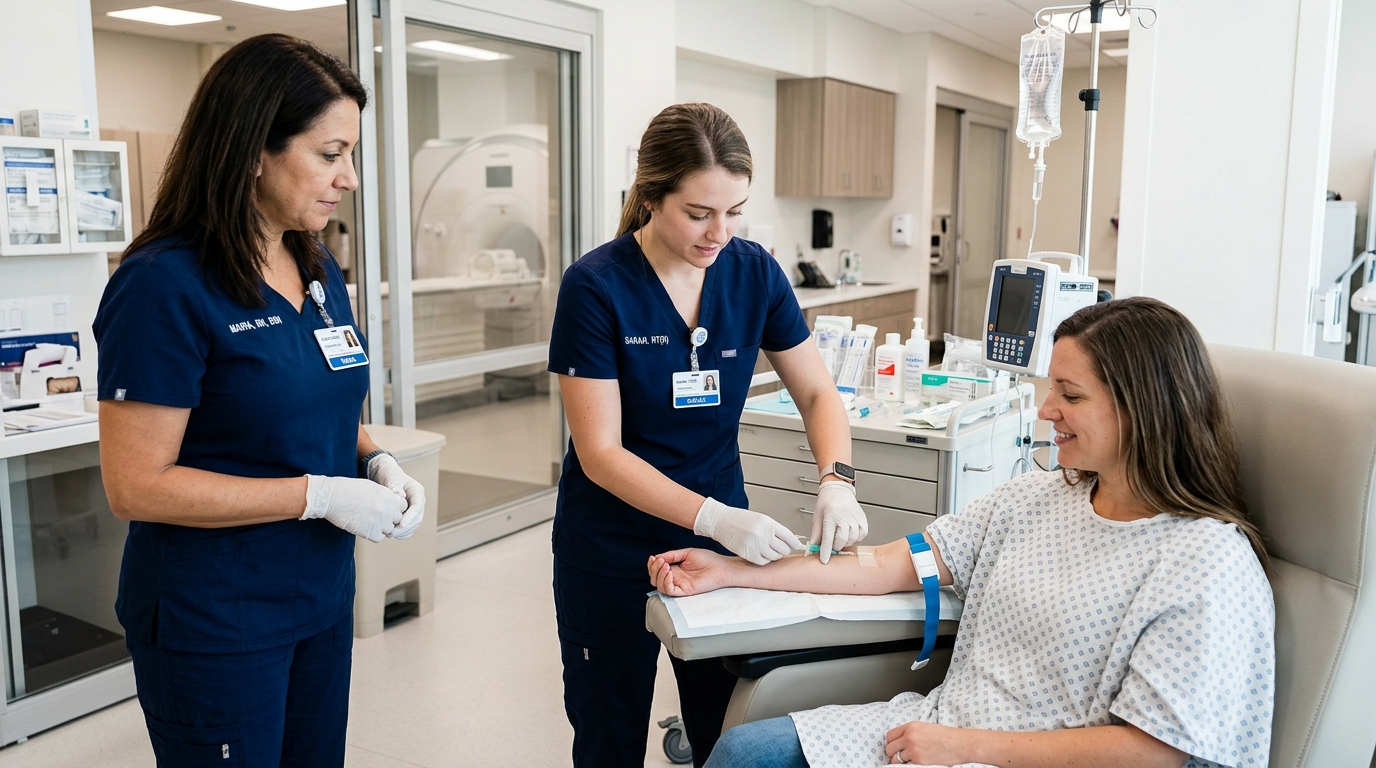
I was training a new technologist last month who'd just moved to Colorado from California, and we hit a wall. She was credentialed and ready to inject contrast media for CT studies. Problem was, Colorado law didn't allow it at our hospital. California absolutely does. Same tech. Same training. Different regulations 1,000 miles apart.
That conversation crystallized something I've been watching unfold over my entire 15-year career: our scope of practice is becoming increasingly fragmented, and if you're hiring techs or managing departments, you need to understand what's actually expanding, what's controversial, and how to navigate it.
This isn't just academic. It affects who you can hire, what training you need to provide, how you credential people, and ultimately what procedures your department can safely bill for.
The Baseline: What Traditionally Defined Rad Tech Scope
Let me start with what hasn't changed, because that's important context.
For most of my career, the core rad tech scope in most states has been:
- Patient positioning
- Exposing radiographs
- Operating imaging equipment (fluoroscopy, ultrasound, CT, etc.)
- Image reconstruction and post-processing
- Patient communication and safety protocols
- Documentation and chart work
Within those broad categories, there's been variation. Some states allow radiographers to perform venipuncture. Some don't. Some allow techs to administer gadolinium. Others don't. But the general baseline is consistent: we position, we expose, we operate equipment, we document.
Everything beyond that has been traditionally guarded by radiologists or nurses. And for good reasons—those are invasive or medication-related activities that require additional training, liability awareness, and credentialing.
But the baseline is shifting. And it's shifting unevenly.
What's Actually Expanding
Let me talk about what I'm seeing in practice right now.
Contrast Administration: This is the big one. Traditionally, radiologists injected contrast or nurses administered it under radiologist supervision. Now, in roughly 15-20 states (including California, Florida, Texas, and New York), technologists can inject iodinated and gadolinium contrast media under specific protocols and credentialing. Colorado doesn't allow it. Neither does Georgia. It's a patchwork.
I've done contrast injection training. It's not difficult—the skill is straightforward. But the credentialing requirements, liability insurance, and protocol development aren't trivial. And I understand the hesitation. You're crossing from pure technical work into medication administration.
Advanced Positioning: This is quieter but significant. Some states now allow techs to position patients for advanced fluoroscopic and CT procedures that traditionally required radiologist input. Think complex spine procedures, advanced chest fluoroscopy, certain interventional techniques. The thinking is: if you've trained for it and you're credentialed, why does a radiologist need to do the initial positioning?
Independent CT Brain Protocols: A few progressive hospitals are allowing trained techs to initiate certain protocols independently—particularly for stroke protocol CTs where speed matters. The tech gets the order, starts the protocol, gets preliminary images to the radiologist quickly. No tech is interpreting; they're just not waiting for radiologist approval to start scanning.
Fluoroscopy Specialization: Several states are moving toward allowing techs with additional fluoroscopy certification to work more independently on certain fluoroscopic procedures. Not interpreting images, but managing the case from a technical perspective.
Ultrasound Credentialing: In some markets, techs trained in ultrasound can be credentialed more quickly and with less RN supervision than has historically been required.
Venipuncture and Cannulation: Already established in many states, but still expanding. Some hospitals now credential techs for peripheral IV placement when it's needed for contrast protocols.
Why This Is Happening
There are three drivers for this expansion, and they're all real.
Shortage pressure. We're short-staffed. When you're 15% below your technologist FTE target, you look for ways to use the technologists you have more efficiently. If a tech can inject contrast without waiting for a nurse or radiologist, you move faster. That's real operational pressure, and it's a legitimate factor.
Competency reality. Here's the honest truth: many techs are already highly trained in tasks that regulation says they can't do. A tech with 8 years of experience performing certain procedures informally might actually be more competent than a radiologist doing it rarely. The credential mismatch between actual skill and legal scope exists.
Education evolution. Modern ARRT (American Registry of Radiologic Technologists) education includes more advanced content than it did when I started. Newer graduates have stronger clinical reasoning skills, better understanding of imaging physics, and deeper knowledge of protocols. The education has evolved; the regulations haven't always kept pace.
Patient safety arguments. Some of the expansion is driven by legitimate patient safety logic: dedicated techs doing the same procedure repeatedly are likely safer than someone doing it occasionally. Specialization creates competency.
The Controversies You Need To Know About
But here's where it gets contentious, and as a hiring manager, you need to understand the push-back.
Radiologist resistance: The radiology community is divided. Some radiologists see scope expansion as efficiency; others see it as encroachment on their scope. There's a legitimate concern about liability distribution. If a tech injects contrast and there's an adverse event, who's liable? The hospital, the tech, the radiologist supervising? It's murky.
Nursing resistance: Nurses are concerned about blurred lines around medication administration. Contrast injection is medication administration. Nurses have been regulated on this for decades. There's legitimate concern about creating different standards for different professionals doing the same task.
Liability and credentialing complexity: When I was credentialed for contrast injection at my current hospital, it required:
- Advanced training course (40 hours)
- Competency assessment
- Continuing education requirements
- Hospital credentialing review
- Malpractice insurance carrier notification
- Protocol development with radiology
- Documentation of any adverse events
That's significant infrastructure. Not every hospital has the resources to credential techs for expanded scope. And if your liability insurance doesn't cover it, you can't do it.
State-by-state fragmentation: The real problem is that there's no national standard. A tech credentialed in Florida might not be credentialed in Arizona. A procedure I can perform independently in California might require radiologist supervision here in Colorado. This creates training nightmares for multi-state health systems and makes hiring and credentialing cumbersome.
Education gap: Not every RT program includes contrast injection training. If you want to hire a tech and immediately credential them for contrast injection, you might need to provide additional training. That's cost and time.
What This Means for Your Hiring and Credentialing
If you're managing hiring in radiology, here's what you need to actually do:
Know your state's scope. Seriously. Pull the regulations. Call your state's radiology licensing board. Understand exactly what your techs are legally allowed to do. Don't assume it matches what you saw at another hospital. I've seen departments credentialing people for procedures that aren't actually legal in their state.
Differentiate in your job postings. If you want to hire someone for contrast-injection capable positions, say so explicitly. But be clear about what that requires: "Must have contrast injection training or be willing to complete certification course" is specific. "Advanced skills a plus" is vague.
Budget for credential training. If you want expanded scope, budget for the training. It's not expensive—usually $500-1500 per course—but it's time. Your new hire needs training and competency assessment. Don't expect someone to hit the ground running on expanded scope without support.
Develop protocols before you hire. Don't hire someone for a role they can't actually perform because your protocols aren't written. Before you credential anyone for anything, have radiologist-approved protocols written. Have liability reviewed. Have credentialing approved.
Ask about training and credentials during interviews. If someone has additional certifications (Advanced Venipuncture, Contrast Injection, Fluoroscopy Specialty, etc.), that's valuable. If they don't and you want expanded scope, ask whether they're willing to pursue it.
Consider the institutional lift. Expanding scope isn't just credentialing one person. It requires physician collaboration, protocol development, possible insurance review, and ongoing quality monitoring. Make sure your institution is actually ready for it.
The Practical Reality I'm Living
Here's what I'm dealing with in 2026:
I'm a Colorado tech. I'm credentialed for advanced fluoroscopy positioning, venipuncture, and canulation. I'm not allowed to inject contrast. If I move to California next year and want to work in radiology, I'd need contrast injection training, but I could actually do more independent work there than I do here. My "scope" changes across a state line.
When I mentor younger techs, I tell them: get educated. Get certified. Build credentials that are transferable. ARRT certification is national. ACR certification is valuable. But state-level scope? Understand your state, understand what you want to build expertise in, and understand that it might not transfer.
For departments building teams: hire for attitude and baseline competency. Then invest in developing people into the expanded scope you need. Don't expect someone to arrive with expertise in the specific expanded-scope areas you want. Develop it internally.
Where This Is Heading
My prediction, based on 15 years in this field: scope will continue to expand, but it will remain fragmented by state. There will be pressure for national standards, but state licensing boards move slowly. We'll see more specialization opportunities—techs building deep expertise in IR, advanced fluoroscopy, specialized CT protocols. And we'll see increasing emphasis on continuing education and certification.
The smart departments aren't waiting for standardization. They're building scope expansion strategically, credentialing people properly, and training for specific competencies they need.
If you're hiring right now, that should inform your strategy. Hire people with foundational excellence and willingness to develop. Invest in their training. Understand your state's legal scope. Develop protocols. Credential properly. And build a department where expanded scope is an opportunity, not a problem.
That's the future of this field. And it's going to define which departments thrive and which ones struggle.
Related Articles

Burned Out as a Rad Tech? Here's How to Reignite Your Career
April 23, 2026

Managing Up: How Rad Techs Can Influence Department Decisions
April 22, 2026

How to Compete With Travel Agency Pay Without Breaking Your Budget
April 22, 2026
Quality Assurance in Radiology: Why QA Culture Affects Retention
April 21, 2026