How to Choose the Right Rad Tech Program: A Student's Guide
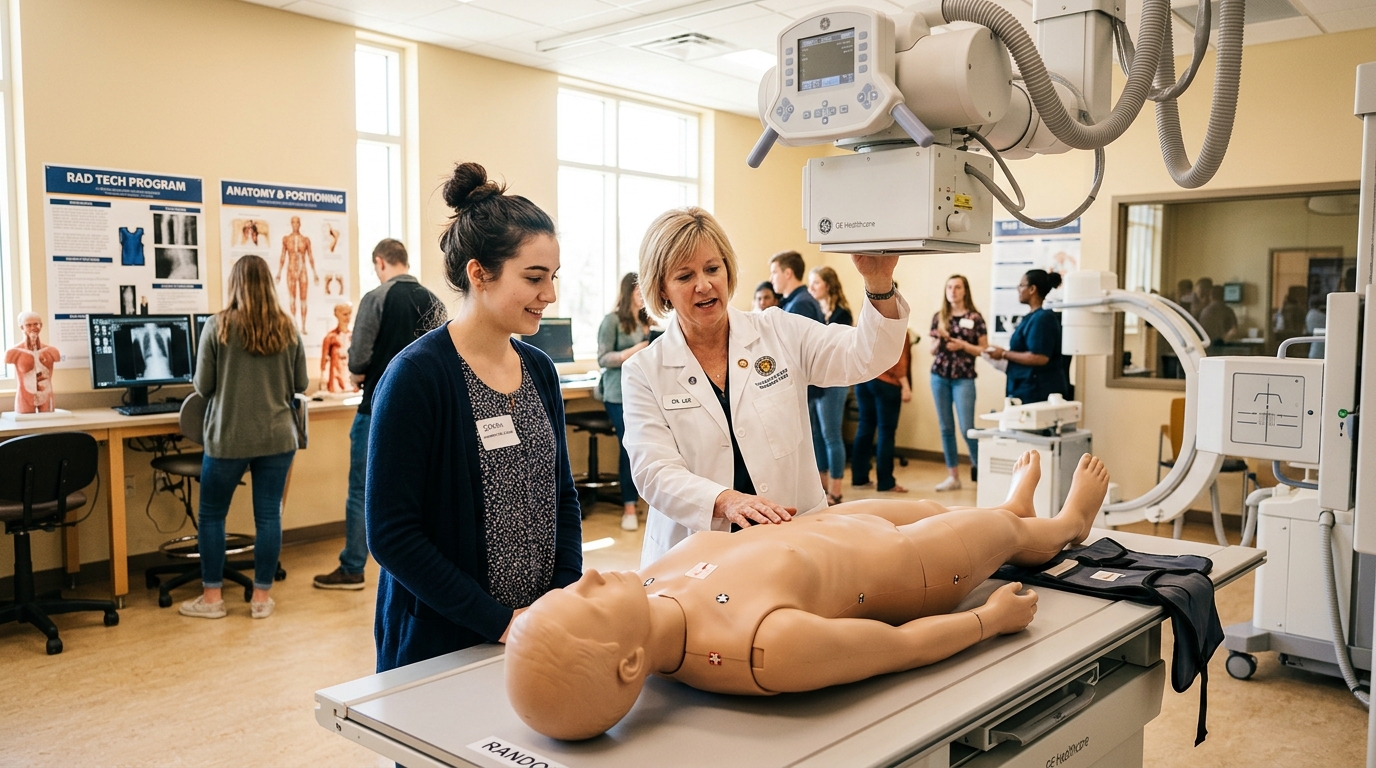
I'm going to be blunt: I get about two emails a month from discouraged rad techs who are barely hanging on in their first job, and at least 40% of them tell me the same thing. "I didn't realize my program was this bad until I started working."
That shouldn't be happening.
You're about to invest $20,000 to $60,000 and two to four years of your life into a rad tech program. You're going to sacrifice weekends, take out loans, work clinicals for pennies, and bet your career on what you learn. The program you choose absolutely matters—maybe more than anything except your own work ethic.
I was a clinical instructor at my program for three years before I went full-time into career coaching, and I've seen the full spectrum. Programs that produce confident, clinically sharp technologists who land great jobs and move into leadership. And programs that produce people who pass the ARRT by the skin of their teeth and then spend their first year learning how to actually be a tech.
The difference isn't random. It's measurable. And you can identify it before you enroll.
JRCERT Accreditation Isn't Optional (And Full Accreditation Isn't Guaranteed)
Let's start with the foundation: JRCERT accreditation. The Joint Review Committee on Education in Radiologic Technology sets the standards for rad tech programs. If a program doesn't have JRCERT accreditation, do not attend it. Period. I don't care how affordable it is or how close to your house. An unaccredited program is basically a scam.
But here's the part that catches people: there are levels. Full accreditation means the program has met all standards. Preliminary accreditation means they're working on it, but haven't proven themselves yet. Some programs operate on preliminary accreditation for years. That's a flag. Ask directly: "Are you fully accredited, or is this preliminary accreditation?" If they dodge the answer, that tells you something.
Also ask about accreditation status in writing. Go to the JRCERT website (jrcert.org) and verify it yourself. Programs will list that accreditation in huge letters, but I've had coaching clients discover their program was on probation or suspended, and they didn't know it until their employer checked during hiring.
ARRT Pass Rates Are a Real Measure of Quality
Your program's ARRT pass rate is not hype. It's a direct measure of whether the program actually taught you what you need to pass the certification exam.
A good program will have ARRT pass rates in the 95-98% range. The national average is around 90-92%, so anything below that is concerning. Some programs will brag about 88% pass rates like that's acceptable. It's not. That means 1 in 8 students who paid tuition isn't becoming a certified technologist.
Here's what I ask programs: "What's your first-time pass rate?" Not cumulative pass rate (where people take the exam multiple times). First-time. This tells you if the program actually prepared people or if they're sending students to retake an exam they weren't ready for. Retakes cost money, tank confidence, and delay employment.
Ask to see the pass rate data for the last three years. If it's been improving, that's good—it means they're making changes that work. If it's been declining, red flag. And if they won't give you the number or say "it varies," don't attend.
Clinical Site Quality Is Everything
Here's where I see programs really differ: clinical sites.
A strong program has clinical affiliations with solid imaging departments. Modern equipment, reasonable patient volume, and supervisors who actually teach. A weak program has clinical sites that are, frankly, using students as free labor. Outdated equipment. Overworked preceptors who have no bandwidth for teaching. Poor patient flow where students stand around watching instead of actually scanning.
Your clinical experience is where you become a technologist. Classroom is foundation, but clinicals are where competency happens. If your program's clinical sites are weak, you will graduate unprepared.
Here's what to ask: "How many clinical sites do you have? Can I meet with a supervisor at one?" If they won't let you visit a clinical site before enrolling, that's suspicious. Good programs are proud of their clinical partnerships.
Also ask: "What's the student-to-supervisor ratio during clinical?" More than 3 students to 1 supervisor is rough. You won't get enough one-on-one attention. And specifically ask: "What happens if I'm struggling in clinical? Do I get extra mentoring or am I on my own?"
Talk to current students if possible. Ask them: "What's your clinical experience been like? Are you actually scanning, or mostly observing? Do your preceptors teach?" Students are honest when you ask directly. If they're lukewarm, that's a sign.
Faculty Experience and Teaching Capability Aren't the Same Thing
Some programs brag about faculty credentials. "Our lead instructor has 30 years of clinical experience!" Great. Is that person any good at teaching?
I've worked with brilliant clinicians who are terrible instructors. They can't explain concepts clearly, they're impatient with struggling students, they don't know how to structure a lesson. Conversely, I've worked with instructors who weren't bleeding-edge clinically but who could take a complex concept and make it stick.
Ask about faculty makeup: "What percentage of your faculty have current clinical licenses? How many have teaching credentials or certifications?" (Look for ARRT-certified instructors or people with education degrees.) "Do you have dedicated instructors, or are some of these part-time adjuncts?"
Dedicated, qualified faculty matter. If your program is staffed mostly by part-timers or clinical staff teaching in the evenings, the program's a side gig, not a priority.
Curriculum Content Needs to Be Transparent
Ask for the actual curriculum. Not the glossy brochure—the detailed course list. Look for:
- Dedicated physics courses (not just embedded in radiography 101)
- Patient care and safety classes
- Radiation protection and dose management (this is critical)
- Pathology and anatomy
- Advanced modalities (at least intro to CT and MRI, not just general radiography)
- A capstone or comprehensive review course before graduation
Programs that skim over physics or combine everything into one survey course aren't preparing you well. Physics is hard, yes, but it's the foundation for everything in imaging. If your program treats it like an afterthought, that's a problem.
Also look at whether the program teaches to the ARRT exam or just teaches radiography in general. There's overlap, but not complete. A good program does both—teaches you to be a technologist AND prepares you for the exam specifically.
Cost Doesn't Equal Quality (But Neither Does Cheap)
Program costs range wildly. Community college programs might be $15,000-$25,000. Private four-year universities might be $60,000-$100,000+. Neither is inherently better.
What matters is value. A four-year bachelor's degree program gives you degree flexibility and potential path to graduate school or other roles. But you don't need a bachelor's degree to be a rad tech. Some of the best techs I know went through two-year community college programs.
Look at the actual value: Will you graduate with a degree that's useful if you want to transition later (imaging informatics, education, management)? What's the starting salary in your area for program graduates? What's the first-job placement rate? If people are graduating and can't find rad tech work, that tells you something.
And be realistic about debt. If you're taking out $80,000 in loans for a job that starts at $45,000 salary, do the math on what that means for your first five years out.
Red Flags Worth Walking Away From
Pay attention to these warning signs:
Pressure to enroll quickly. A good program has enough demand that they don't need to pressure you. If there's a sales-y vibe, where they're pushing you to commit this week because of "limited spots," be skeptical.
Vague answers about program specifics. If you ask about ARRT pass rates and they give you marketing speak instead of numbers, that's a problem. Programs that are proud of their metrics will share them.
No clinical experience until year two. Clinicals need to start early, ideally first year. Programs that keep you in classroom for a full year before touching patients are not structured well.
High cost with low support. Some programs charge premium tuition and don't offer tutoring, exam prep, or student support services. That's greed, not value.
Poor communication or unclear requirements. If the program website is hard to navigate or you can't get questions answered, imagine being a struggling student trying to get support during the program.
My Honest Recommendation
Before you commit, call or visit at least three programs. Talk to someone in admissions, ask for an instructor to answer technical questions, and if possible, talk to current students. It takes maybe six hours of your time and it's the most important six hours you'll spend on this decision.
Look for JRCERT full accreditation, 95%+ ARRT pass rates, quality clinical sites, dedicated faculty with teaching credentials, and a curriculum that goes deep on physics and modern modalities. Look for programs that answer your questions clearly and directly without marketing fluff.
The best program for you is one where you'll graduate knowing you're actually ready to do this job—not just ready to pass an exam, but ready to walk into a radiology department and be a competent professional.
That's what I look for when I'm coaching someone considering a program. And honestly? That's what distinguishes techs who call me three years in going "I love this career" versus techs calling me in crisis saying "I'm not cut out for this."
Your program choice matters that much.
Related Articles

Burned Out as a Rad Tech? Here's How to Reignite Your Career
April 23, 2026

Managing Up: How Rad Techs Can Influence Department Decisions
April 22, 2026

How to Compete With Travel Agency Pay Without Breaking Your Budget
April 22, 2026
Quality Assurance in Radiology: Why QA Culture Affects Retention
April 21, 2026