Building a Radiology Department Culture That Retains Top Talent
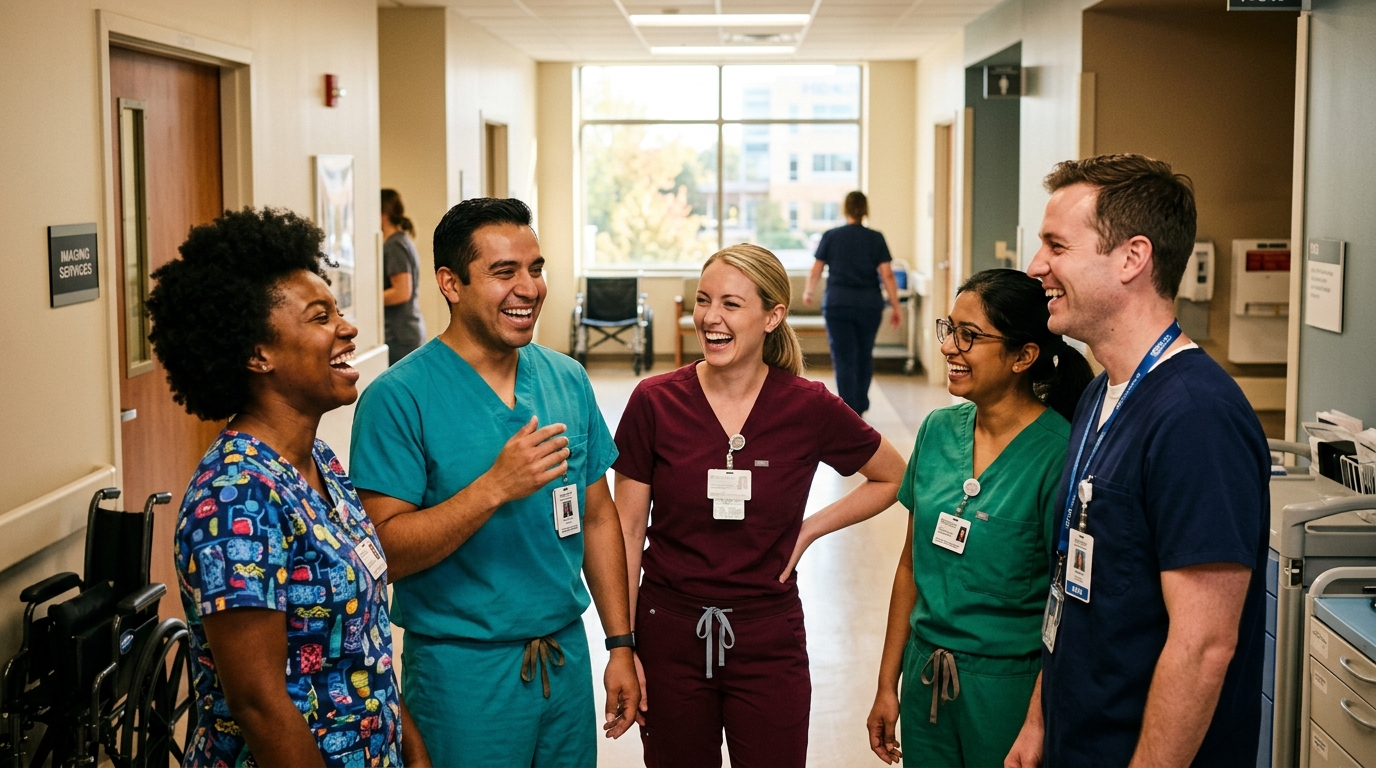
I've spent the last decade working in nuclear medicine, and I've had a front-row seat to something that fascinates and frustrates me in equal measure: the stark difference between radiology departments where people want to show up and those where talented techs are constantly updating their resumes.
It's not about the salary, though compensation matters. It's not about free bagels on Friday or a ping-pong table in the break room. Real culture—the kind that keeps your best people—runs much deeper. It's about how people are treated, whether they feel valued, and whether they see a future in the department where they work.
I've watched stellar departments attract transfers from across the hospital while struggling departments hemorrhage talent. The difference comes down to intentional choices that leaders and teams make every single day. Let me share what I've learned about what builds departments people actually want to stay in.
Culture Isn't About Perks—It's About People
Here's something I've observed after years in healthcare: you can offer unlimited coffee and monthly happy hours, but if your department culture is toxic, people will still leave. They'll leave for less money. They'll leave for longer commutes. They'll leave because what you're offering doesn't compensate for what you're taking away.
Real culture is about how people are treated when they make mistakes. It's about whether someone feels comfortable asking for help. It's about whether the environment supports growth or stifles it. A department with genuine culture invests in its people because it understands that technologists are the backbone of imaging operations.
I once worked in a CT department where the director held monthly "culture lunches." Not catered events, but actual conversations. She'd ask what made people feel valued, what frustrated them, what they needed to do their jobs better. She listened. She acted on the feedback. That department had a waiting list of people wanting to transfer in, and I never once saw a posting for an open position last more than two weeks.
Contrast that with a hospital where I worked briefly—they had an unlimited break room policy and threw an annual appreciation event. Yet people were leaving constantly. Why? Because the leadership didn't actually ask what their team needed. They assumed perks were enough. They were wrong.
Leadership Behavior Sets the Cultural Tone
I can tell you the culture of a department in the first five minutes by observing how the director or manager interacts with staff. Do they know people's names? Do they ask about challenges? Do they admit when they're wrong?
Great leaders in radiology departments do something radical: they make themselves accessible. They round through departments. They sit with techs during lunch occasionally and just listen. They're present during stressful situations—trauma activations, system outages, understaffed shifts—not hiding in offices. They model the behavior they want to see: calm under pressure, respect for all team members, commitment to excellence without perfectionism.
I worked with a manager who used to say, "My job is to remove barriers so you can do your job." She meant it. When we were drowning in paperwork, she found solutions. When equipment wasn't working, she escalated until it got fixed. When someone was struggling, she asked directly: "What do you need from me?" This wasn't soft management—it was incredibly effective management. People worked harder for her, not because they were afraid, but because she had their backs.
Conversely, I've worked under managers who led by fear and micromanagement. Those departments had turnover like a revolving door. The best techs left first because they had options. That's always how it works.
Knowledge Sharing Prevents Burnout and Builds Community
One of the biggest culture killers I've seen is when experienced techs hoard knowledge. Someone knows a shortcut, understands a difficult protocol, or has figured out how to work around a system issue—and they keep it to themselves because they want to feel indispensable. This creates gatekeeping, silos, and resentment.
Departments with strong cultures approach this differently. They intentionally create systems for peer mentorship and knowledge sharing. This might look like lunch-and-learns where senior techs teach newer ones. It might be a shared digital space where people document best practices. It might be formal mentorship pairings or informal shadowing.
I worked in a nuclear medicine lab where the director instituted "knowledge exchange" sessions—30 minutes every other week where someone presented something they'd learned or optimized. It could be anything: a new imaging technique, how to troubleshoot a common equipment problem, tips for difficult patient populations. No presentation skills required. Just sharing. People got energized about learning from each other rather than competing.
When technologists feel like they're part of a learning community, they stay longer. They feel invested in the department's success and in their colleagues' growth.
Recognition That Goes Beyond Annual Reviews
Performance reviews are necessary but insufficient. People need to know they're doing good work in the moment, not once a year in a formal meeting with a rating.
Real recognition in great imaging departments looks different. It's the supervisor who says, "That was a really difficult case and you handled it with such patience," right after it happens. It's peer recognition—colleagues calling out when someone goes above and beyond. It's being included in bigger conversations and having your expertise actually sought and respected.
I've seen departments create peer recognition programs where techs nominate each other for "excellence in imaging" or "teamwork above and beyond." These don't come with big bonuses (though sometimes they do), but they come with genuine acknowledgment. And strangely, for most people, being recognized by peers means more than being recognized by management.
What kills morale fast? When only certain people get recognition. When the star CT tech gets praised constantly while the mammography tech does excellent work in silence. When new equipment gets celebrated but the people who master it don't. Inclusive recognition—acknowledging excellence across all modalities, all shifts, all experience levels—is essential.
Equipment and Resources Matter More Than You'd Think
Here's something that takes new managers by surprise: techs won't stay in a department with broken, outdated, or inadequate equipment for very long. It's not laziness. It's that working with poor equipment is demoralizing and physically demanding.
When you're fighting with technology every day, when you're doing workarounds on outdated systems, when you know better equipment exists down the hall but your department can't get it—that wears on people. It says, "Your work isn't important enough to invest in."
The best departments I've worked in treated equipment maintenance and upgrades as a culture issue, not just a budget issue. They advocated for resources. They showed leadership how poor equipment impacted quality, safety, and staff wellbeing. They got creative about funding when budgets were tight.
I knew a director who made a compelling case to hospital administration about how upgrading their nuclear medicine equipment would improve patient outcomes AND reduce technologist injuries from repetitive strain. She got the funding. And the culture shift was immediate. People felt valued. Work became less physically painful. Retention improved.
Professional Development Is an Investment, Not an Expense
Departments that retain talent invest in their people's growth. This means tuition support for certifications, funding for conference attendance, time for continuing education, and clear pathways for advancement.
I've worked in departments where you needed permission to attend a training, where the department wouldn't cover CE costs, where there was no clear advancement without leaving. Guess what? Those departments couldn't keep talented people. The ones that did keep them had directors who said things like, "What certifications interest you? How can we support you in pursuing them?"
One nuclear medicine supervisor I worked with made it clear to every new tech: "We'll support you getting your specialty certifications, we'll help you attend relevant conferences, and we'll help you think about your career path—whether that's becoming an expert in your modality, moving into supervision, or something else entirely." People stayed because they felt like the department was invested in their long-term success, not just their immediate productivity.
Conflict Resolution Builds Trust or Destroys It
Every department has conflict. The question is how it's handled. I've worked in cultures where conflict was avoided, swept under the rug, or handled in ways that made everything worse. I've also worked in cultures where conflict was seen as normal and was handled constructively.
Great departments have processes for addressing issues directly and fairly. When there's a conflict between team members, it gets addressed quickly—not ignored until resentment builds. When someone isn't meeting standards, they get clear feedback and support for improvement, not backstabbing gossip.
This requires managers who are trained in difficult conversations and genuinely committed to fairness. It requires team members who can give and receive feedback. It's harder than letting things fester, but it's the only way to build real trust.
Inclusion Across All Modalities
I've seen it happen too many times: a hospital's new fancy CT or MRI scanner becomes the "prestige" modality. The techs working there get attention and resources. Meanwhile, the radiography or ultrasound staff feel overlooked.
Departments with strong cultures don't play favorites. They recognize that every modality is important. They ensure that recognition, resources, and opportunities for growth are distributed equitably. A tech in mammography deserves the same respect and investment as a tech in interventional radiology.
This sounds simple, but it's surprising how often it doesn't happen. And when it doesn't, the overlooked staff members eventually leave. They find departments that value all their people equally.
Creating Your Department's Culture
Building a culture that retains talent isn't mysterious. It starts with leadership that genuinely cares about people and makes intentional choices every day. It means investing in your team—in their growth, their wellbeing, their recognition. It means treating all modalities and all staff members with equal respect. It means addressing problems directly instead of letting them fester.
After a decade in healthcare imaging, I've learned that the departments people fight to stay in aren't necessarily the fanciest or the highest-paying. They're the ones where people feel valued, supported, and part of something meaningful. That kind of culture doesn't happen by accident. It's built deliberately, day by day, choice by choice.
If you're a leader or part of a department culture team, ask yourself: What are we doing to show our techs that we value them? Where can we listen better? What barriers can we remove? Those answers will tell you more about your actual culture than any survey could.
And if you're a technologist reading this, know that the culture you deserve exists. There are departments building it right now. You don't have to settle for less.
Related Articles

Burned Out as a Rad Tech? Here's How to Reignite Your Career
April 23, 2026

Managing Up: How Rad Techs Can Influence Department Decisions
April 22, 2026

How to Compete With Travel Agency Pay Without Breaking Your Budget
April 22, 2026
Quality Assurance in Radiology: Why QA Culture Affects Retention
April 21, 2026