Breast Imaging Specialist: Why Mammography Techs Are in Such High Demand
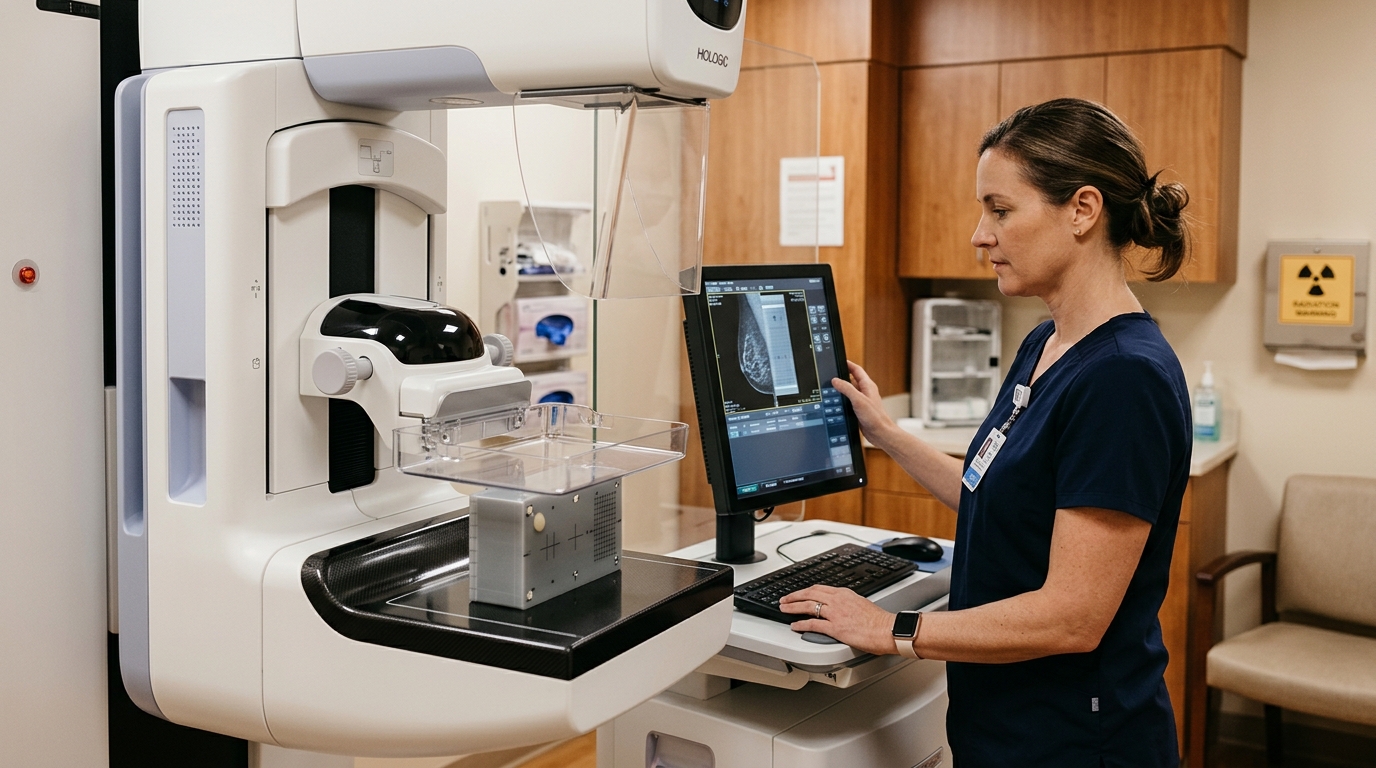
I'm going to start with the business case because it frames everything: there's a documented shortage of mammography technologists in the United States, and it's not getting better anytime soon. We're facing a crisis where facilities are genuinely struggling to staff mammography departments, and if you're a rad tech considering specialization, this shortage translates into incredible job security, competitive pay, and job options you probably wouldn't have in general radiography.
But here's the part that matters more to me: mammography isn't just a high-demand specialty. It's one of the most emotionally rewarding fields in radiology. You're directly impacting women's health at a critical level. You're often the person who detects early cancers. You're educating patients about screening. You're supporting women through some of their most vulnerable healthcare moments.
I didn't start my career thinking I'd be passionate about this. I trained as a nuclear medicine tech, and I still do nuclear medicine work. But over the past eight years, I've worked increasingly with breast imaging, and I've become deeply committed to it. Let me tell you why you should consider it.
The Shortage: Why It's Real and Sustained
Before I explain the opportunity, let's be honest about the shortage.
The American Society of Radiologic Technologists (ASRT) has documented that mammography technologists are in critical shortage. We're not talking about a regional blip—we're talking about sustained, national shortage. Here's why:
Aging population: Women over 40 are more likely to need mammography. As the Baby Boomer population ages into mammography years, screening demand increases. That's basic demographics, and it's been happening for years.
Screening guidelines: Major health organizations including the American Cancer Society have updated screening recommendations, and while there's still debate about screening age and frequency, the net effect is that more women are being screened more regularly. That requires more techs.
Early detection emphasis: There's increased public awareness about the importance of early breast cancer detection. Insurance coverage for screening has expanded. Women are seeking mammograms more actively. All of this creates demand.
Technologist attrition: Mammography is emotionally intense work. It involves difficult patient encounters, delivering suspicious findings, and managing patient anxiety. Some techs burn out. Some retire. Some transition to easier specializations. The pipeline of new technologists hasn't kept up with departures.
Limited training capacity: Not every facility trains mammography techs. Not every program offers mammography certification. The educational infrastructure hasn't expanded to meet demand.
The result: facilities are desperate. They're offering signing bonuses. They're offering flexible scheduling. They're paying premium salaries. If you have or can get a mammography credential, you're in a position of strength in the job market.
What Mammography Certification Entails
Okay, so how do you actually become a mammography tech?
The prerequisite is straightforward: you need to be ARRT-certified in radiography. That's your primary credential. Once you have that, you're eligible to pursue a mammography specialization credential, which ARRT calls AART (Advanced Registered Technologist) with a mammography designation, or sometimes referred to as Breast Imaging certification.
The training typically involves:
Clinical experience: Most programs require 200+ hours of supervised clinical mammography experience. This is hands-on work in a mammography department under the supervision of an experienced tech or radiologist. You're learning how to position patients, operate mammography equipment, understand image quality, and manage equipment-specific protocols.
Didactic education: Formal coursework covering breast anatomy, normal mammography findings, pathological findings, quality assurance, patient communication, and radiation protection specific to mammography. This is typically 40-80 hours of classroom or online instruction.
Certification exam: The ARRT mammography exam is challenging. It covers mammographic positioning, image evaluation, quality control, safety, and clinical correlation. You have to really understand breast imaging to pass.
Most people complete this training while working in a facility with a mammography department. Some facilities will hire you as a "mammography trainee" and put you through their training program. Others expect you to already have the credential. The most realistic path is to find a facility willing to invest in your training.
The Practical Reality: What Mammography Techs Actually Do
Let me give you a real sense of what this work looks like.
You arrive at your shift, and you've got a schedule of patients—some screening, some diagnostic. Screening mammography is high-volume and protocol-driven: patients come in for routine mammography, you perform standard views, images are sent to a radiologist, most come back normal. Your role is efficient, accurate positioning and image quality.
Diagnostic mammography is different. You're working with patients who have symptoms, palpable lumps, or abnormal screening findings. You might be doing additional imaging views, ultrasound correlation, or working with the radiologist in real time to guide the imaging. That's more interactive and problem-solving oriented.
One thing that surprised me: the patient interaction component is significant. Unlike general radiography where you might see someone for one or two images, you're spending 20-30 minutes with mammography patients. You're often the person explaining what's happening, addressing anxiety, and setting the tone for their experience.
I work with a lot of patients who are nervous, who've had previous abnormal findings, who are scared of what they're about to hear. A good mammography tech is skilled at technical positioning and patient communication. You're reassuring without being dismissive of their concerns. You're professional without being cold.
That's the emotional piece. You're doing health care at an intimate level.
Why the Pay Is Good (And Getting Better)
Let's talk money because it matters.
The median salary for a mammography-specialized tech in 2025 was approximately $72,000-$78,000 nationally, depending on location. But that's median. Experienced mammography techs in high-demand areas are making $85,000-$100,000+. Some facilities are offering signing bonuses of $3,000-$10,000 for experienced mammography techs.
Why is the pay comparatively high? Three reasons:
Shortage premium: Facilities are competing for a limited pool of qualified techs. Competition drives salary up.
Expertise compensation: Mammography requires specific knowledge and certification. You're not just certified in general radiography—you've added specialization. That's worth more.
Operational importance: Mammography is revenue-generating for facilities. Screening programs and diagnostic breast imaging bring in patients and insurance money. A shortage of mammography techs directly impacts facility revenue. Facilities will pay to keep positions filled.
The combination of job security, pay, and job availability makes this specialty financially attractive right now. And here's the thing: I don't expect the shortage to improve in the next decade. Demand will likely increase as screening recommendations evolve and the population ages.
The Emotional Rewards (This Matters More Than It Sounds)
I want to be honest about the hard part before I get to the good part.
Mammography is emotionally taxing. You'll deliver news about suspicious findings. You'll see scared patients. You'll work with patients dealing with breast cancer diagnosis. There are difficult emotional moments in this specialty that don't exist in other radiography fields.
But here's what also happens: you get to be part of cancer detection. You get to know that the positioning you just did perfectly might be the image that catches an early, treatable tumor. You get to educate women about their breast health. You get to support women through a health care process that matters enormously to them.
I worked with a patient named Sandra who came in for diagnostic imaging after finding a lump. She was terrified. Turned out to be benign. When she got those results, she cried with relief in the hallway outside our department, and she specifically asked for me by name at her follow-up appointment a year later to thank me for how I'd handled her imaging.
That happens in mammography. That kind of meaningful connection between you and your patients. Your technical skill directly impacts their care. Your compassion directly impacts their experience.
Not every radiography specialty offers that level of direct patient impact. Mammography does.
Getting Started: The Realistic Path
So you're interested. What's your next step?
Option 1: You're already an ARRT-certified rad tech: Look for mammography tech positions at facilities that offer training. Many will hire you as a "mammography trainee" and put you through their program if you commit to staying for a reasonable period (usually 2-3 years). Emphasize your commitment to the specialty in interviews.
Option 2: You're in rad tech school: Talk to your program advisor about including mammography rotations if they're available. Some programs offer shadowing or clinical time in mammography departments. That experience makes you more attractive to facilities wanting to hire and train you.
Option 3: You're considering rad tech school: If you're drawn to breast imaging specifically, you can mention this during your education. Some programs have mammography partnerships or emphasize breast imaging. That's good context as you choose schools.
Once you're working in mammography, the certification timeline is flexible. Some facilities want you certified within 12 months. Others give you 18-24 months. The important thing is to have a clear timeline and a supportive environment for your training.
Also worth noting: the ARRT mammography exam cost is around $100-$150, not expensive relative to the career impact.
The Specialization's Future
Here's my prediction: mammography is going to become even more specialized over the next decade. There's already a subspecialty called "breast imaging" that includes mammography, ultrasound, and MRI of the breast. Some techs are becoming dual or triple-certified in breast modalities. That hyperspecialization comes with even better pay and more job security.
If you get into breast imaging now, you're positioned to grow within the specialty as it evolves. You could become a mammography tech, then add breast ultrasound, then possibly MRI of the breast. You're building a niche within a niche.
Real Talk: Is It Right for You?
Mammography is not for everyone, and I think that's important to say clearly. If you're the type of tech who wants to see high volume, quick turnovers, and minimal patient interaction, mammography will feel slow and emotionally demanding.
If you thrive on technical complexity and want to work with the latest imaging technology, general radiography or CT or MRI might be more fulfilling.
But if you care about patient outcomes, if you want meaningful work that directly impacts health, if you can handle emotional intensity and turn it into compassionate care, if you want strong job security and good pay in a specialty that's actually growing—mammography is genuinely worth considering.
The shortage is real. The opportunity is real. And the work, honestly, is some of the most meaningful radiography you can do.
Related Articles

Burned Out as a Rad Tech? Here's How to Reignite Your Career
April 23, 2026
Managing Up: How Rad Techs Can Influence Department Decisions
April 22, 2026

How to Compete With Travel Agency Pay Without Breaking Your Budget
April 22, 2026
Quality Assurance in Radiology: Why QA Culture Affects Retention
April 21, 2026